
E-Commerce & AI Commerce News Digest (March 13, 2026)

Akihiro Suzuki
Twitter
Source: www.ttnews.com
Key Takeaways
- Shopify launches 'Agentic Storefronts' for in-ChatGPT product discovery and purchases
- Logicbroker survey: 1 in 3 e-commerce leaders predict 50%+ of transactions will be AI agent-driven by 2027
- Agentic commerce implementation, standardization, and regulation accelerate simultaneously
Top Stories
Shopify Enables Product Discovery and Purchase Inside ChatGPT via 'Agentic Storefronts'

Shopify tells merchants purchases will soon be available 'inside ChatGPT'
Shopify told merchants their products will soon be discoverable and purchasable inside ChatGPT through its new 'agentic storefronts' feature.
Shopify has announced a new "Agentic Storefronts" feature that will make products discoverable and purchasable inside ChatGPT. Following OpenAI's retreat from its "Instant Checkout" direct checkout plans, Shopify is taking the lead in the agentic commerce purchase experience.
The feature allows ChatGPT users to search for products within conversations and purchase them through Shopify's payment infrastructure. With OpenAI pivoting to third-party integrations rather than building its own checkout, Shopify's existing infrastructure is positioned as the primary beneficiary.
For e-commerce businesses, this opens a new sales channel on a massive AI platform. It represents a significant step toward an era where AI agent-driven purchases become commonplace.
Deep Dive: Shopify Launches 'Agentic Storefronts' Enabling In-ChatGPT Purchases
Logicbroker Survey: Over 50% of E-Commerce Transactions Will Be AI Agent-Driven by 2027
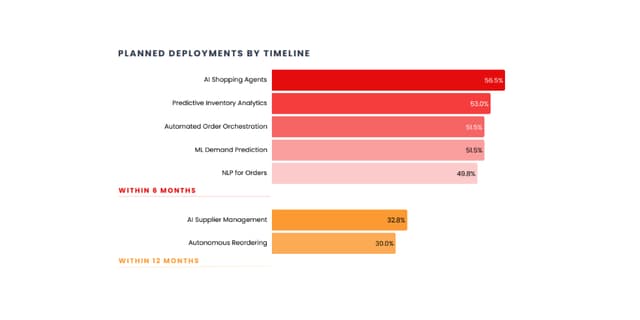
Logicbroker Data: AI Set to Drive Over Half of eCommerce Transactions by 2027, Say 1 in 3 eCommerce Leaders
Logicbroker, the Agentic Commerce Orchestration Engine for enterprise retailers and brands that transforms LLM searches into storefronts, today released its State of Agentic Commerce Adoption report.
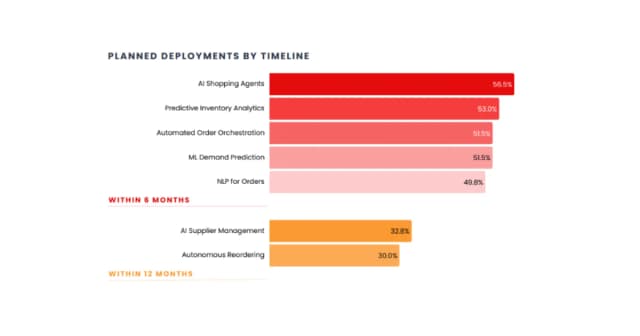
Logicbroker, an agentic commerce orchestration company, has released "The State of Agentic Commerce Adoption" report. According to the survey, one in three e-commerce leaders predicts that "over 50% of e-commerce transactions will be driven by AI agents by 2027."
The report compiles survey results from enterprise-scale retailers and brands, showing that agentic commerce adoption is recognized not as a mere trend but as a structural transformation across the industry. Interest in Logicbroker's platform, which transforms LLM searches into storefronts, is also growing.
This data suggests that the era of AI agents at the center of the purchasing process may arrive sooner than expected.
Deep Dive: Logicbroker Survey Reveals Over Half of E-Commerce Transactions Will Be AI Agent-Driven by 2027
Agentic Commerce
Santander × Visa Complete First Live Agentic Payment Transactions in Latin America

Santander tests agentic payments across Latin America
Banco Santander is doubling down on its exploration of agentic payments, conducting its first live transactions with Visa in multiple Latin American markets.
Banco Santander is accelerating its agentic payments efforts, completing its first live transactions with Visa across multiple Latin American markets. This marks a significant move showing that agentic commerce is transitioning from proof-of-concept to live operations.
Following the recently reported Visa-Mastercard competition for agentic payment standards, the launch of actual bank pilot operations signals the rapid formation of an agentic payment ecosystem. The deployment in Latin American emerging markets suggests potential for global expansion beyond developed nations.
Deep Dive: Santander and Visa Complete Latin America's First Live Agentic Payment Transactions
Azoma Launches Merchant-Side Standard Backed by L'Oréal, Unilever, and Mars

Azoma launches new merchant-side standard for 'brand friendly' agentic commerce
Azoma, the pioneers of Agentic Commerce Optimization, today launched Agentic Merchant Protocol (AMP), the powerful new foundational platform empowering retailers and brands.
Azoma, a pioneer in agentic commerce optimization, has officially launched the "Agentic Merchant Protocol (AMP)," a new merchant-side standard. Global brands including L'Oréal, Unilever, and Mars have expressed support.
AMP provides a "brand-friendly" standard for how AI agents access product information, ensuring that brand intent and values are accurately conveyed in agentic commerce. With backing from major consumer goods companies, it is moving closer to establishing itself as an industry standard.
Amazon Injunction Sends Ripples Through the Future of Agentic Commerce

Amazon Injunction Could Change the Future of Agentic Commerce
Amazon won a legal victory when a judge blocked Perplexity from using its AI shopping agent to make purchases on behalf of users.
Analysis continues on the ripple effects of Amazon's court order blocking Perplexity's AI shopping agent from making proxy purchases. This injunction could significantly impact the legal framework for agentic commerce.
The case highlights uncharted legal territory regarding the scope of AI agent authority on e-commerce sites, their relationship with terms of service, and platform control rights. The entire industry is watching how this precedent will constrain the development of agentic commerce.
'Know Your Agent' Framework — A New Era of AI Agent Authentication

Know Your Agent Models Are a Must for Enterprises
'Know Your Agent' tools can help authenticate AI agents and defend against malicious bots as automation reshapes digital commerce.
As agentic commerce expands, a new framework called "Know Your Agent (KYA)" has been proposed. It extends the financial industry's established "Know Your Customer (KYC)" concept to AI agents, providing identity verification and authentication mechanisms.
In an era where AI agents handle purchases and payments on behalf of users, verifying that an agent legitimately represents a user and is not a malicious bot is essential. The KYA framework is becoming a critical element of enterprise security, ensuring agent authentication, permission management, and transaction traceability.
Deep Dive: PYMNTS and Trulioo Introduce 'Know Your Agent' Framework for AI Agent Authentication
AI Commerce Tools
Google Debuts Universal Commerce Platform (UCP) in India with Flipkart

Google to debut Universal Commerce Platform in India with Flipkart in coming months
Google to launch Universal Commerce Platform with Flipkart. UCP enables AI-driven shopping via AI Mode in Search and Gemini app. APAC expansion planned.
Google will deploy its AI commerce platform "Universal Commerce Protocol" in India for the first time, partnering with Flipkart as the first market for international expansion.
Following Splitit's recent endorsement of UCP, Google is now taking the critical step of actual market deployment. The launch in India's massive e-commerce market will serve as a litmus test for whether UCP can function as global agentic commerce infrastructure. The push to establish industry standards for a common platform where AI agents search, compare, and purchase products is accelerating.
Deep Dive: Google's Universal Commerce Protocol Debuts in India with Flipkart Partnership
Razorpay Launches World's First 'Agent Studio' for Payment Automation
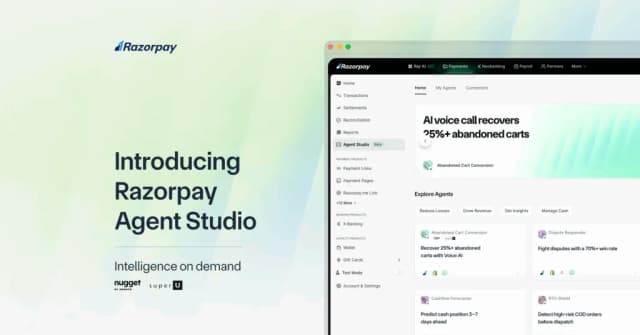
Introducing Razorpay Agent Studio
Razorpay unveils the world's first Agent Studio to automate payments using AI agents built on payment infrastructure.
Indian payments company Razorpay has announced "Agent Studio," the world's first development platform for automating payment processes through AI agents.
With Agent Studio, businesses can leverage AI agents to automate payment operations including invoice processing, recurring payments, and customer refund handling. As one of India's largest online payment platforms, Razorpay's provision of agentic payment infrastructure has the potential to significantly transform the payment experience in India's e-commerce market.
Deep Dive: Indian Payments Giant Razorpay Unveils World's First 'Agent Studio'
Zalando Accelerates Preparation for AI Retail Era — Provides Scayle Platform to Levi's
How Zalando is preparing for an AI retail world
If AI is the future, what are the prospects for online retail? Zalando believes that by 2030, 15% of all e-commerce will be handled by AI agents.
Europe's largest fashion e-commerce company Zalando is preparing for the AI retail era. The company predicts that "15% of all e-commerce will be handled by AI agents by 2030" and is strengthening the external provision of its technology platform "Scayle."
As one outcome, Levi's e-commerce platform will migrate to Scayle. Zalando is pursuing a strategy to establish itself not just as an e-commerce company but as a technology provider, building new revenue streams for the AI era.
Global E-Commerce Trends
TikTok Shop Surpasses 33,000 Sellers in France — European Social Commerce Expansion

TikTok Shop crosses the 33,000-seller mark in France
TikTok Shop has surpassed 33,000 sellers in France, signaling the steady expansion of social commerce in Europe.
TikTok Shop has surpassed 33,000 sellers in France, demonstrating the steady expansion of social commerce in the European market.
France is one of the key markets in TikTok Shop's European rollout. Purchase experiences leveraging live commerce and short-form video are gaining traction, particularly among younger consumers, strengthening its presence as a sales channel distinct from traditional e-commerce platforms. The growth in seller numbers reflects brands and retailers beginning to incorporate social commerce into serious sales strategies.
China Strengthens Cross-Border E-Commerce Food Recall Regulations
China Strengthens Regulation of Cross-Border E-Commerce Food Recalls
The State Administration for Market Regulation and the Ministry of Commerce jointly announced that they will further strengthen regulatory oversight of recalls of food imported through cross-border e-commerce retailing.
China's State Administration for Market Regulation and Ministry of Commerce have jointly announced strengthened recall regulations for food imported through cross-border e-commerce. Supervisory oversight of food imports through cross-border e-commerce platforms is being tightened.
This regulatory strengthening directly affects international food brands and e-commerce operators participating in China's cross-border e-commerce market. Enhanced compliance measures and potential revisions to product registration and quality control processes may be required. Businesses considering cross-border e-commerce expansion into the Chinese market need to closely monitor the latest regulatory developments.
EU: 35% of Online Shoppers Report Problems

35% of EU online shoppers report problems
More than a third of online shoppers in the European Union experienced one or more problems last year. Late delivery is mentioned most often.
Over 35% of European Union online shoppers experienced one or more problems last year. The most frequently reported issue was delivery delays.
These findings show that fulfillment and delivery quality challenges remain unresolved despite European e-commerce growth. For e-commerce businesses, this data reaffirms that improving delivery experience quality is a critical issue directly impacting repeat rates and customer satisfaction, beyond just sales growth.
Corporate News & Partnerships
Amazon Prime Day Moves from July to June
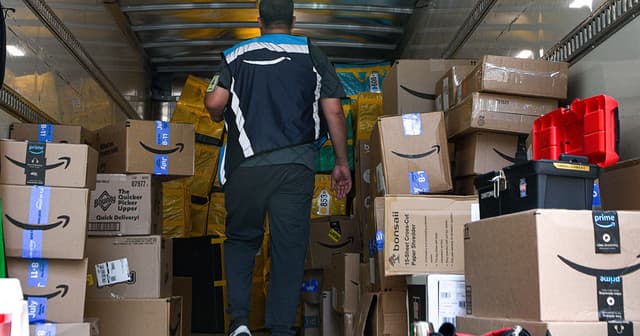
Amazon Moves Prime Day Into June From July
Amazon is moving up its annual Prime Day sale to June from July, shifting the schedule for an event that's become a big part of the e-commerce economy.
Amazon is moving its annual Prime Day sale from July to June, according to people familiar with the matter. This schedule change for an event with significant influence on the e-commerce economy will affect the entire industry's promotional calendar.
The move is likely driven by the accelerating summer shopping season and differentiation from competitors' sale events. E-commerce businesses may need to adjust inventory planning and marketing campaign timing. Sellers on non-Amazon platforms also need to factor Prime Day's ripple effects into their strategy.
Amazon Business Records 35% YoY Growth in Annual Sales

Amazon Business Sees 35% YoY Growth In Annual Sales
Amazon Business has achieved 35% year-over-year growth in annual sales, demonstrating strong B2B e-commerce expansion.
Amazon Business has achieved 35% year-over-year growth in annual sales, demonstrating robust B2B e-commerce expansion.
As enterprise procurement digitization accelerates, the Amazon Business platform has become deeply embedded in corporate purchasing processes. Growth is driven by enhanced B2B-specific features including approval workflow automation, bulk purchasing efficiency, and expense management integration. The B2B e-commerce market continues to be a high-growth sector.
Payments & Fintech
Agentic Fraud — New Security Risks from AI Agent Exploitation

The Rise of Agentic Fraud: How AI Agents Are Reshaping Payment Security
AI agents are creating new security risks in payment systems as agentic fraud emerges as a growing threat.
As AI agents proliferate, a new security risk called "Agentic Fraud" has emerged. Cases of malicious AI agents exploiting payment processes are beginning to surface.
In environments where AI agents autonomously execute transactions, sophisticated fraud becomes possible that conventional bot detection technologies cannot adequately address. The technical challenge of distinguishing legitimate AI agents from malicious ones is closely related to the "Know Your Agent" framework discussed above. For e-commerce operators and payment providers, investing in security to guard against new fraud risks while enjoying the benefits of agentic commerce is essential.
Summary
Today's news reveals numerous signs that agentic commerce has entered the "implementation phase." From Shopify's in-ChatGPT purchases to Santander×Visa's live transactions in Latin America and Logicbroker's survey data, the transition from concept to live operations is clear.
Simultaneously, discussions around agentic commerce infrastructure are intensifying across legal challenges (Amazon injunction), security challenges (agentic fraud, KYA framework), and standardization challenges (Azoma AMP, Google UCP). For e-commerce businesses, starting technical and operational preparations now for AI agent-driven purchasing is essential.
Related Articles

EC & AI Commerce News Digest (March 12, 2026)
Meta completes Moltbook acquisition for agentic web commerce, Walmart AI assistant users spend 35% more, agentic commerce infrastructure accelerates across payment, authentication, and protocol layers.

Shopify Launches 'Agentic Storefronts' Enabling In-ChatGPT Purchases
Shopify begins ChatGPT integration for its 'Agentic Storefronts' in March, enabling product discovery and purchase inside ChatGPT as OpenAI retreats from Instant Checkout.
Logicbroker Survey Reveals Over Half of E-Commerce Transactions Will Be AI Agent-Driven by 2027
Logicbroker's survey of 600+ enterprise e-commerce leaders shows 1 in 3 predict AI agents will drive over 50% of transactions by 2027, with 95% already deploying AI capabilities.
Tags
Share this article