
EC & AI Commerce News Digest (February 5, 2026)

Akihiro Suzuki
Twitter
Source: finance.yahoo.com
Key Takeaways
- Mastercard to provide agentic AI payment tools to merchants by end of June
- AI commerce fundamentally threatens eBay and Amazon's marketplace business models
- OpenAI vs. Google battle for agentic commerce standardization leadership intensifies
Top Stories
Mastercard Launches Agentic AI Tools for Merchants

Mastercard offers agentic AI tools
The payments giant plans to provide agentic AI capabilities to merchants using its services by the end of June.
Payments giant Mastercard has announced plans to provide agentic AI capabilities to its merchants. By the end of June 2026, merchants using Mastercard's services will be able to leverage AI agent-powered payment features.
This move signals that a major payment network is seriously committed to building agentic commerce infrastructure. Alongside Visa, PayPal, and Stripe, Mastercard's entry is rapidly building the infrastructure for AI agents to execute payments securely.
For merchants, the key advantage is being able to adopt AI agent capabilities through existing Mastercard contracts. Without new technology investments, merchants can begin preparing for agentic commerce, significantly lowering the adoption barrier especially for small and mid-sized e-commerce businesses.
Full article: Mastercard's "Agent Suite" Accelerates Enterprise Agentic AI Adoption
AI Commerce Threatens eBay and Amazon's Marketplace Models

How AI commerce threatens eBay, Amazon
Agentic robots that shop and pay without human involvement could potentially render retail marketplaces obsolete – and big merchants are responding.
Payments Dive analyzes how autonomous AI agent purchasing and payment could fundamentally threaten the business models of existing marketplaces like eBay and Amazon. In a world where AI selects, compares, and completes payments without human involvement, the traditional model of "listing products on a marketplace to be found" loses its value.
Major merchants are already responding to this shift. They're building APIs for direct AI agent access and providing structured product data—new strategies for being "chosen by AI."
For e-commerce businesses heavily dependent on marketplaces, this is a catalyst to rethink sales channel strategies. Preparing for an era where AI agents handle purchasing requires structured product data and strengthened direct channels.
Full article: AI Agents Threaten Amazon and eBay—Giant Marketplaces Forced to Redefine Their Raison d'Etre
Agentic Commerce
OpenAI vs. Google: The Battle for Agentic Buying Leadership
OpenAI vs. Google: Who Owns the Agentic Buying Moment?
ACP and UCP aim to reshape how buying happens — but one bets on conversation, the other on discovery at scale.
Two agentic commerce standards—OpenAI's Agent Commerce Protocol (ACP) and Google's Universal Commerce Protocol (UCP)—are competing over the future of purchasing. According to CMSWire's analysis, their approaches are fundamentally different.
OpenAI's ACP bets on conversation-driven purchasing, where products are discovered and purchased within ChatGPT conversations. Google's UCP focuses on discovery at scale, building systems where AI agents can access product information across the entire search ecosystem.
For e-commerce businesses, the pragmatic strategy is not to bet on one standard but to build data infrastructure that supports both. The agentic commerce protocol competition could reshape industry dynamics much like the mobile OS wars.
Full article: OpenAI vs. Google—Who Will Win the Agentic Buying Moment?
OpenClaw: Could It Be the "Napster Moment" for Agentic E-Commerce?

OpenClaw may be the 'Napster moment' for agentic e-commerce: What that means for travel
Mario Gavira explains why OpenClaw could mark a definitive pivot from conversation to autonomous, local-first action.
Travel industry media PhocusWire analyzes how the agentic payment protocol "OpenClaw," led by Circle, could become the "Napster moment" for agentic e-commerce. Just as Napster irreversibly transformed the music industry, OpenClaw could fundamentally reshape the structure of commerce.
OpenClaw's defining feature is the pivot from conversational AI to "autonomous, local-first" action. It aims to standardize a system where AI agents autonomously discover, compare, and purchase products without dialogue.
The travel industry is pioneering AI agent adoption due to the complexity of bookings and payments, and these insights could ripple across e-commerce broadly. With Mastercard Agent Suite, Google UCP, OpenAI ACP, and now OpenClaw, the agentic commerce protocol competition is becoming increasingly multipolar.
Full article: Is OpenClaw the "Napster Moment"? The Irreversible Tipping Point for Agentic E-Commerce
Payments & Fintech
Rothschild Downgrades PayPal to Sell—Cites Eroding Competitive Edge in Agentic Commerce
Rothschild & Co. Redburn Downgrades PayPal (PYPL) to Sell
PayPal Holdings Inc. (NASDAQ:PYPL) is one of the most undervalued quality stocks to buy right now. On January 28, Rothschild & Co. Redburn downgraded PayPal to Sell from Neutral and lowered its price target to $50 from $70.
Investment bank Rothschild & Co. Redburn has downgraded PayPal from Neutral to Sell, lowering its price target from $70 to $50, citing "erosion of competitive edge in agentic commerce."
While PayPal's scale should theoretically be advantageous in agentic commerce, Rothschild argues this advantage is being diluted by new entrants. Despite aggressive moves including the recent Cymbio acquisition and new CEO appointment, Wall Street's assessment remains harsh.
Notably, "agentic commerce" has become recognized enough in financial markets to be used as a rationale in stock analyst ratings.
Business & Partnerships
Yozo.ai Closes $1.7M Pre-Seed to Scale Autonomous E-Commerce AI Agents

Yozo.ai Closes $1.7M Pre-Seed to Scale Autonomous E-Commerce AI Agents
Yozo.ai announced the closing of a $1.7 million pre-seed funding round to accelerate development of its AI-driven e-commerce platform and expand beyond
Yozo.ai, which develops autonomous AI agents specialized for e-commerce, has completed a $1.7 million pre-seed funding round. The funds will be used to accelerate development of its AI-driven e-commerce platform and expand operations.
Yozo.ai provides AI agents that autonomously support e-commerce site operations, automating tasks like product listing, pricing optimization, and inventory management to improve operational efficiency.
While still at the pre-seed stage, the continued flow of startup funding into the e-commerce x AI agent space is a notable industry trend. Following Genstore.ai's $10 million raise, the market for AI-native e-commerce tools continues to accelerate.
Global EC Trends
Walmart Readies Cross-Border Shipping Program "Walmart Exports" for Sellers
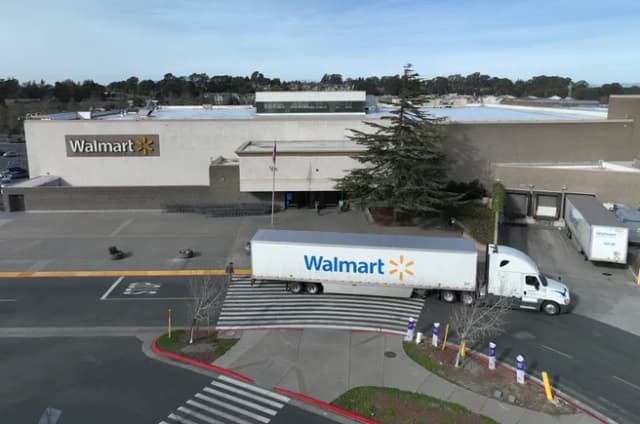
Walmart readies cross-border shipping program for sellers
Launching early this year, Walmart Exports will allow eligible products to be delivered from the U.S. to shoppers in Mexico and Canada.
Walmart is launching "Walmart Exports" in the first half of 2026, a cross-border shipping program for sellers using WFS (Walmart Fulfillment Services). Eligible products will be deliverable from the U.S. to consumers in Mexico and Canada.
Having achieved a $1 trillion market cap, Walmart continues accelerating its marketplace global expansion. For sellers, the appeal is reaching the entire North American market through existing WFS infrastructure without additional logistics investment.
With Amazon's FBA (Fulfillment by Amazon) already supporting cross-border shipping, Walmart's equivalent offering intensifies competition among North American e-commerce marketplaces.
Amazon's Physical Grocery Push Deepens Its Fight Against Walmart

Amazon's physical grocery push deepens its fight against rival Walmart
Amazon was once the upstart running ahead of Walmart with its revolutionary e-commerce business. It now finds itself betting on the kind of mega-store typically associated with its Bentonville, Arkansas, rival.
Amazon, once the e-commerce disruptor that outpaced Walmart, is now entering Walmart's home turf with large-format physical stores. According to Reuters, Amazon is accelerating its physical grocery expansion, directly challenging Walmart's core battleground.
This signals that online-offline convergence has become an unavoidable strategy for e-commerce giants. While Walmart's $1 trillion market cap was fueled by e-commerce growth, Amazon now sees physical store expansion as key to its own growth.
How omnichannel strategies in grocery and everyday goods play out will be one of 2026's major themes to watch.
Consumer Trends
Q1 Is a Critical Window for Brand Loyalty as AI Changes Consumer Shopping Behavior
Q1 Is a Critical Window for Brand Loyalty as AI Changes How Consumers Shop
Attentive® released findings from two new surveys revealing Q1 as a critical window for brands to engage new shoppers.
Marketing platform Attentive has released findings from two new surveys revealing Q1 as a critical window for brands to acquire new customers.
As AI transforms consumer shopping behavior, traditional brand loyalty is being disrupted. AI recommendations and agentic purchasing are strengthening the trend of consumers choosing "the best AI-suggested option" over "their usual brand."
For brands, securing AI-era customer touchpoints early in Q1 and building a position as a "brand chosen by AI" in agentic commerce is becoming urgent.
AI Commerce Tools
UK Retailers Eye Online Growth as AI Transforms Shopping and Delivery
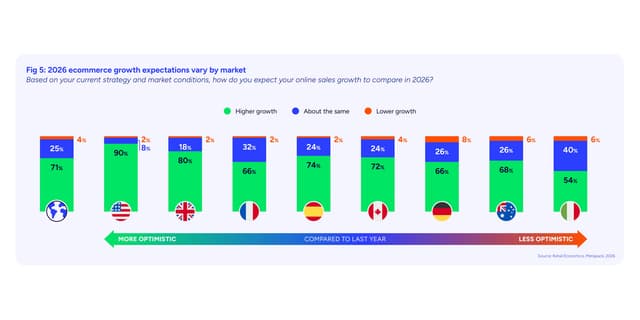
UK Retailers Eye Online Growth as AI Transforms Shopping and Delivery
Metapack, a leading intelligent delivery platform, today released the Ecommerce Delivery Benchmark Report 2026 in partnership with Retail Economics.
Delivery intelligence platform Metapack has released the "Ecommerce Delivery Benchmark Report 2026" in partnership with Retail Economics, reporting how UK retailers are pursuing online growth through AI adoption.
According to the report, UK retailers are deploying AI across both shopping experience and delivery, leveraging it for personalized product recommendations and delivery route optimization.
The UK's simultaneous AI transformation of e-commerce and delivery offers valuable reference points for other markets including Japan. Particularly in delivery cost optimization and customer experience enhancement, significant untapped potential for AI application remains.
Logistics & Fulfillment
Quiet Logistics Dismantling Continues with Warehouse and Customer Transfer to Stord

Quiet Logistics dismantling continues with warehouse, customer transfer to Stord
Logistics provider Stord continued its e-commerce expansion on Tuesday with a deal to absorb a warehouse and customers that American Eagle Outfitters is leaving.
The dismantling of SoftBank Vision Fund-backed fulfillment company Quiet Logistics continues. Logistics provider Stord has signed a deal to take over a warehouse and customers that American Eagle Outfitters is leaving.
Quiet Logistics had provided robotics-powered fulfillment for e-commerce but is undergoing business contraction. Meanwhile, Stord is further expanding its e-commerce logistics operations through this asset acquisition.
The e-commerce logistics industry is seeing consolidation as over-funded startups are weeded out and operationally efficient players absorb their assets. Fulfillment market restructuring is expected to continue throughout 2026.
Summary
February 5 in e-commerce and AI commerce demonstrated that the "infrastructure layer" of agentic commerce is solidifying rapidly. From Mastercard's payment tool launch to the ACP vs. UCP standards competition and OpenClaw's emergence, there was movement across multiple layers from protocols to infrastructure.
As Payments Dive's analysis highlights, the picture of AI agents threatening existing marketplace models through autonomous purchasing is becoming increasingly clear. For e-commerce businesses, structuring product data and preparing to be "discovered" by AI agents is a critical business priority for 2026.
Looking ahead, key developments to watch include Amazon's earnings announcements related to AI and e-commerce, and the adoption progress of agentic commerce standards.
Related Articles

EC & AI Commerce News Digest (February 3, 2026)
Klarna, PayPal, and FedEx strengthen agentic commerce infrastructure; J.P. Morgan and Forrester identify trust as the biggest barrier to AI commerce adoption; AI agent readiness accelerates across food, logistics, and payments

Mastercard Launches "Agent Suite" for Agentic Commerce — AI Agent Building Service for Banks and Merchants
Mastercard announces Agent Suite for AI agent building and deployment. Analysis of the difference from Agent Pay and integrations with Google, Microsoft, and OpenAI

OpenAI vs. Google—Who Will Own the Agentic Buying Moment? Two Protocols Shaping the Future of Commerce
OpenAI+Stripe's ACP and Google+Shopify's UCP compete as open standards for AI agent purchasing. Analysis of the dual-protocol strategy e-commerce businesses need
Tags
Share this article