
OpenAI vs. Google—Who Will Own the Agentic Buying Moment? Two Protocols Shaping the Future of Commerce

Akihiro Suzuki
Twitter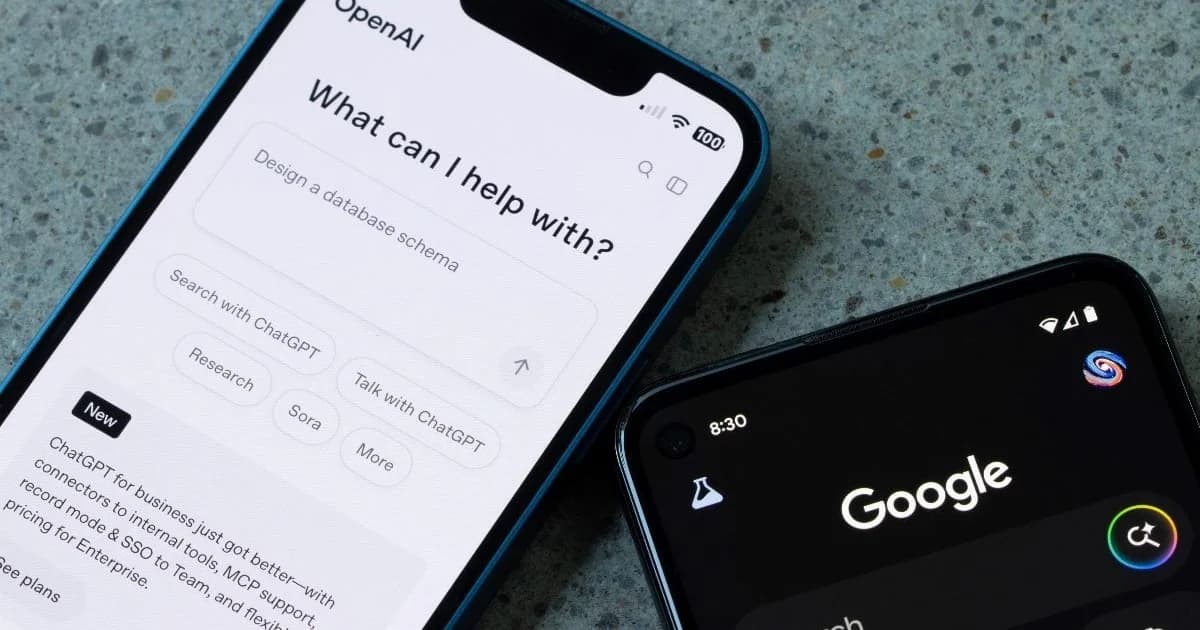
Source: www.cmswire.com
Key Takeaways
- OpenAI+Stripe's "ACP" and Google+Shopify's "UCP" are competing as foundational standards for AI agent-driven purchasing
- ACP specializes in conversation-based purchasing while UCP covers the entire buying journey from discovery to post-purchase support
- E-commerce businesses need to prepare for both, with structured product data and AEO (Agentic Engine Optimization) becoming urgent priorities
OpenAI and Google's Full-Scale Competition Over Agentic Commerce Standards
OpenAI vs. Google: Who Owns the Agentic Buying Moment?
ACP and UCP aim to reshape how buying happens — but one bets on conversation, the other on discovery at scale.
On February 4, 2026, Justin Racine, Principal Strategist at Perficient, published an analysis titled "OpenAI vs. Google: Two Visions for the Future of Agentic Commerce" on CMSWire. The article provides a detailed analysis of how OpenAI's ACP and Google's UCP are competing for industry standard status with fundamentally different approaches to the future of agentic commerce—where AI agents discover, compare, and purchase products on behalf of consumers.
Industry Context
Agentic commerce is a new purchasing model where AI agents understand human intent and autonomously execute product search, comparison, and purchase. The rapid concretization of this concept is driven by a series of protocol announcements from late 2025 through early 2026.
In September 2025, OpenAI introduced "Instant Checkout" to ChatGPT and released ACP, co-developed with Stripe. This feature enables direct product purchases within conversations on ChatGPT, used by over 700 million people weekly. Starting with US Etsy sellers, it has expanded to over 1 million Shopify merchants including Glossier and SKIMS. PayPal announced ACP support in October, and Checkout.com announced enterprise ACP adoption in November, rapidly expanding the payment ecosystem.
On January 11, 2026, Google formally announced UCP at NRF (National Retail Federation) annual conference. Co-developed with Shopify, Etsy, Wayfair, Target, and Walmart, it boasts over 20 partners including Adyen, American Express, Mastercard, Visa, and Stripe. Google CEO Sundar Pichai stated that "AI agents will handle a large portion of shopping in the not-too-distant future."
ACP vs. UCP—The Fundamental Differences Between Two Protocols
ACP: "Conversation to Buy"
ACP, as detailed on Stripe's official blog, is an open standard enabling programmatic commercial transaction flows between AI agents and businesses. Its core premise is "completing purchases within conversations."
When a user tells ChatGPT "Find me running shoes under $100," the agent asks follow-up questions to narrow choices and recommends optimal products. After the purchase decision, payment completes with a few taps on the chat screen. Product search results are organic and sponsor-free, ranked purely by relevance.
Technically, it's published as open source under the Apache 2.0 license with easy integration into existing payment infrastructure. Businesses using Stripe can enable agentic payments with just one line of code change. ACP specifications continue evolving, with frequent updates since the September 2025 initial release: fulfillment enhancements (December), capability negotiation (January 2026), and extensions, discounts, and payment handlers (January 2026).
UCP: "Browse to Buy"
UCP is a broader protocol covering the entire purchasing journey from product discovery through checkout to post-purchase support. According to the official Google blog, UCP is compatible with existing protocols including Agent2Agent (A2A), Agent Payments Protocol (AP2), and Model Context Protocol (MCP).
Notable are the new features deployed on UCP. "Business Agent" enables retailers to publish brand-specific AI chat agents on Google Search, with Lowe's, Michael's, and Poshmark among early launchers. "Direct Offers" is an advertising pilot where retailers can display exclusive discounts in AI Mode search results, with Petco and Samsonite participating.
Shopify CEO Tobi Lutke posted on X: "Shopify co-developed UCP, building the foundation for agentic commerce. Open by default—platforms and agents can start transacting immediately." Shopify merchants can now sell directly on Google AI Mode and the Gemini app, with Microsoft Copilot integration also updated.
Comparison
| Comparison | ACP (OpenAI + Stripe) | UCP (Google + Shopify) |
|---|---|---|
| Core Model | Conversation-based purchasing | Search & discovery-based purchasing |
| Agent Role | Purchase assistant recommending optimal products through dialogue | Discovery engine displaying products based on relevance, inventory, and shipping |
| Purchase Venue | Within ChatGPT chat UI | Google Search, Gemini, and related services |
| Revenue Model | Transaction fees (organic product display) | Future ad revenue (Direct Offers, etc.) |
| Business Action | Direct agent integration | Product data indexing (new SEO) |
The "Third Giant" Amazon's Absence and Industry Impact
As Racine notes in the article, Amazon currently participates in neither ACP nor UCP. According to GeekWire's investigative reporting, Amazon blocks AI crawlers, excluding 600 million product listings from AI search results. As a result, ChatGPT-to-Amazon referral traffic has declined 18% month-over-month, falling below 3%.
Amazon CEO Andy Jassy acknowledged in the latest earnings call that agentic commerce "could be very good for e-commerce" while pointing out that current agents "aren't great at personalization and are often inaccurate on pricing and delivery estimates."
In contrast, Walmart is actively embracing both protocols, supporting both ChatGPT Instant Checkout and Gemini integration. According to GeekWire, ChatGPT referral traffic to Walmart increased 15% from July, growing to 20% of total traffic.
However, Forrester's Principal Analyst Emily Pfeiffer offers a cautious view: "It's still very early days, the experience is poor, and penetration is very low." Independent analyst Juozas Kaziukenas also points out that OpenAI's own research shows ChatGPT shopping result relevance at just 37%, calling it "shockingly low."
Impact on E-Commerce Businesses
Racine proposes the concept of "Big C Commerce" in his article—a philosophy of providing consistent purchasing experiences across all customer touchpoints, unconstrained by specific channels or devices. In the agentic commerce era, e-commerce businesses face the following imperatives.
1. Building a Dual-Protocol Strategy For ACP, businesses need direct agent integration; for UCP, structured data registration with Google Merchant Center. Shopify merchants can manage both centrally through Agentic Storefronts, but other platforms require individual implementation.
2. Transitioning from SEO to AEO (Agentic Engine Optimization) Google's new data attributes for Merchant Center go beyond traditional keywords to include "answers to common product questions," "compatible accessories," and "alternative product information." Product data quality and comprehensiveness become more important than ever for being chosen by AI agents.
3. Strengthening Post-Purchase Experience Both protocols maintain the business as "merchant of record." Fulfillment, returns, and customer support quality directly influence an agent's next recommendation.
4. Payment Infrastructure Readiness For Stripe users, ACP adoption requires minimal code changes. UCP initially uses Google Pay with PayPal support planned. Preparing for multiple payment provider support is recommended.
Summary
If OpenAI's ACP is like "finding the perfect car at a Lamborghini dealership through dialogue with a sales associate," Google's UCP is closer to "asking a store associate where a product is at Target"—as Racine illustrates. Both aim for the same goal of "purchasing" but differ in the assumed depth and complexity of intent.
According to Checkout.com's research, agentic commerce could account for 21% of monthly household spending within five years. For e-commerce businesses, a dual strategy supporting both ACP and UCP should be seen not as unavoidable cost but as investment in securing next-generation customer touchpoints. The agentic commerce race has just begun, but businesses not yet at the starting line are already falling behind.
Related Articles

Google Announces Universal Commerce Protocol (UCP), Forms Major Coalition for Agentic Commerce Standardization
Google unveiled UCP at NRF 2026, an open standard co-developed with Shopify, Walmart, and 20+ partners to standardize AI agent-powered shopping experiences.

What is Instant Checkout? Revolutionary Feature for In-Chat Purchase Completion
[2-Minute Read] Learn about Instant Checkout mechanisms and benefits. Discover how completing product discovery to purchase within AI chat reduces abandonment and boosts conversion in Agentic Commerce implementation.
Google vs OpenAI: The Agentic Commerce Business Model War
Google vs OpenAI in the agentic commerce battle - comparing advertising revenue vs transaction fee business models and the protocol war between UCP, ACP, and AP2.
Tags
Share this article