
Visa Officially Launches Agentic Ready Program in Europe with 21 Banks and Fintechs

Akihiro Suzuki
Twitter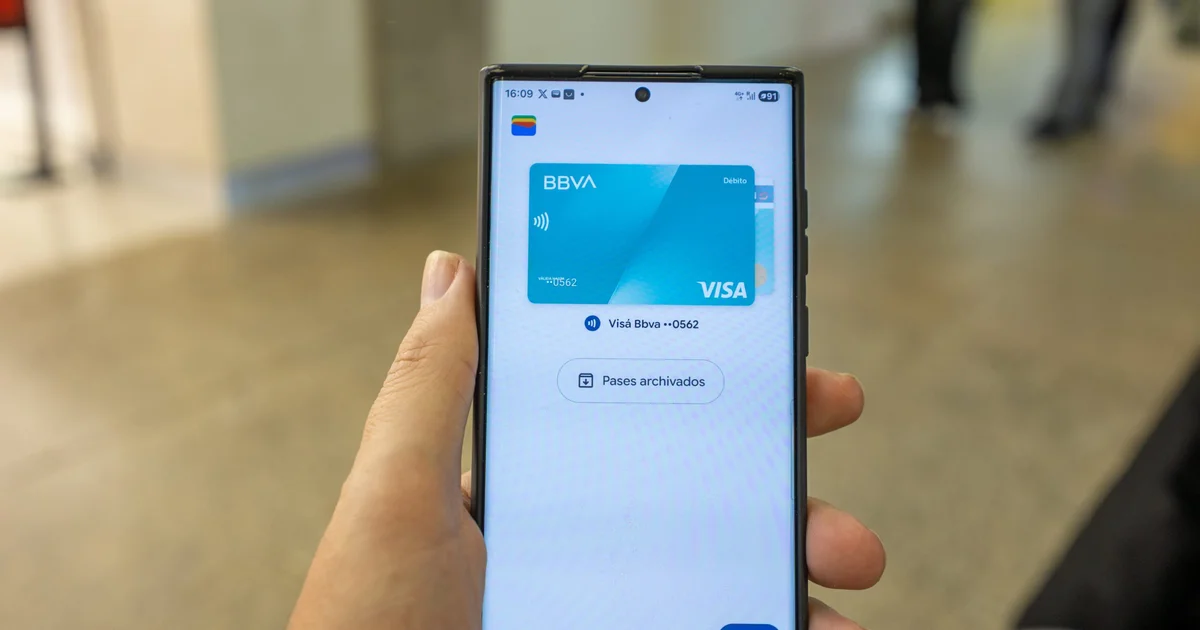
Source: www.digitalcommerce360.com
Key Takeaways
- Visa officially launches the Agentic Ready program with 21 banks and fintechs across Europe
- Built on tokenization and biometric authentication, providing a structured environment for safe testing of AI agent-initiated payments
- E-commerce businesses should verify their payment infrastructure's agent readiness and accelerate tokenization adoption
Visa Officially Announces the Agentic Ready Program
Why Visa views agentic commerce as next big growth opportunity
Visa views agentic commerce as the next big opportunity in the payments industry, according to one of its C-suite executives.
On March 17, 2026, Visa (NYSE: V) officially announced "Visa Agentic Ready," an AI agent payment testing program for banks and fintech companies. The rollout begins in Europe (including the UK), with 21 issuers joining as initial partners, including Barclays, HSBC UK, Banco Santander, Revolut, Commerzbank, Nationwide Building Society, and Nexi Group.
The program provides a structured environment for banks to safely test and validate agent-initiated payments, preparing for the era of agentic commerce where AI agents autonomously search, select, and pay for products on behalf of consumers.
Background and Industry Trends
Visa's approach to agentic commerce has been incremental. In May 2025, it launched payment support for AI agents, followed by the launch of agentic AI payment tools alongside Mastercard in October. In December, Visa strengthened identity verification and fraud prevention through a strategic partnership with Akamai Technologies and established an agentic commerce development platform through a partnership with AWS. Across the industry, protocols and tools to enhance agent interoperability are also advancing in parallel, including Google's Universal Commerce Protocol (UCP) and Mastercard's Agent Suite.
Jack Forestell, Visa's Chief Product and Strategy Officer, stated at the Wolfe Research FinTech Forum in New York in mid-March that he has "not seen a growth opportunity like this since the dawn of e-commerce in the late '90s and early 2000s." He shared internal economic forecasts suggesting that macro-level efficiencies driven by agentic AI could boost GDP by 80 to 150 basis points.
As the culmination of these efforts, Agentic Ready is positioned as a "bridge from testing to production deployment."
Agentic Ready's Technical Foundation — A Two-Layer Architecture of Tokenization and Biometric Authentication
Visa Agentic Ready takes the approach of applying existing security technologies to agent-initiated transactions rather than building new payment infrastructure. At its core is a two-layer architecture of tokenization and biometric authentication.
Tokenization replaces consumers' card numbers with unique digital codes. When an AI agent initiates a purchase, it uses this token rather than actual card information, ensuring sensitive financial data never passes through the agent.
Biometric authentication (fingerprint, facial recognition, etc.) serves to bind the token to a verified account holder. Visa also applies risk scoring and configurable spending controls, enabling issuers to restrict the amounts and conditions under which agents can transact. Consumers set these parameters in advance.
Notably, real transactions have already been completed. Banco Santander used Visa credentials issued in Spain to complete an end-to-end process where an AI agent purchased a book — authorization, tokenized payment, and network settlement — without any manual consumer intervention.
The Strategic Intent Behind Choosing Europe as the Starting Point
There are clear reasons why Agentic Ready, despite being a global program, chose Europe as its first deployment region. According to Visa's official announcement, Europe has high adoption rates of tokenization, passkeys, and advanced authentication technologies, providing an environment well-suited for testing and collaboration.
Mathieu Altwegg, Head of Product & Solutions at Visa Europe, stated that "as AI agents are changing how purchases are made, payments need to keep pace." Visa has already built track records with partners in North America, Asia Pacific, the Middle East, and Latin America, with global expansion expected to accelerate.
Four Practical Impacts of Agentic Commerce According to Forestell
At the Wolfe Research FinTech Forum, Forestell outlined four specific changes that agentic commerce will bring to the payments industry.
Reduced payment friction. Agents improve transaction decline rates, boosting payment success rates. Higher success rates directly translate to increased payment volume.
Explosive growth in transaction counts. Visa's average transaction value declined 20% from approximately $55 to $45 between 2015 and early 2026, while transaction counts tripled to 300 billion. As agents split purchases into multiple smaller transactions seeking optimal prices, this "payment density" will increase further.
Purchase diversification and efficiency. While consumers tend to habitually buy from the same stores, AI agents seek out optimal products across multiple retailers and purchase at the best price.
Accelerated digitization of B2B payments. Agents remove friction from B2B payment processes including supplier onboarding, purchase orders, invoicing, payments, and reconciliation. Through its collaboration with spend management company Ramp, Visa has enabled AI agents to execute instant payments and automated reconciliation using virtual Visa cards.
Impact and Action Items for E-Commerce Businesses
Verify your payment partner's agent readiness. You should check whether your issuer or PSP participates in the Agentic Ready program or has the technical infrastructure to support agent-initiated transactions. The 21 initial partners include Revolut and Nexi Group, companies widely used in e-commerce payments.
Prioritize tokenization adoption. The safety of agentic commerce depends on tokenization. Discuss with your payment partner whether your checkout flow supports network tokens, and if not, establish a timeline for adoption.
Prepare for agent-driven purchase diversification. As Forestell points out, agents split purchases across multiple stores seeking optimal prices. This means "maintaining product data that agents will select" and "competitive pricing" become more important than traditional UI/UX. PYMNTS CEO Karen Webster has also argued that in an era where agents handle purchasing, payment credentials rather than store frontends will become the center of commerce.
Conclusion
The official launch of Visa Agentic Ready clearly marks the transition of agentic commerce from "concept stage" to "proof stage." The participation of 21 banks and fintechs, combined with Banco Santander completing a real transaction, provides powerful proof that AI agent payments are technically feasible.
The next developments to watch are the results from Europe's first phase and the timeline for full-scale deployment in Asia Pacific and North America. With Visa predicting "millions of consumers purchasing via AI agents by the 2026 holiday season," agent-readiness of payment infrastructure is becoming a "current-quarter priority" rather than a "future concern" for e-commerce businesses.
Related Articles
Visa-Commissioned Report Reveals How Acquirers Are Preparing for Agentic Commerce — Overconfidence in Existing Infrastructure and Three Real-World Barriers
PYMNTS Intelligence surveyed acquirers in the US, UAE, and Brazil for Visa Acceptance Solutions, revealing the reality of agentic commerce readiness. While many acquirers believe existing infrastructure is sufficient, regulatory, identity, and liability challenges remain unresolved.
FIS Partners with Visa and Mastercard to Secure Banks' Position in Agentic Commerce
FIS announces partnership with Visa and Mastercard to launch bank-focused agentic commerce platform by end of Q1 2026. AI agents will automatically execute product searches, negotiations, and purchases through existing payment networks.

The Paradox of Agentic Commerce: AI Wins the 'Search War' but Loses the 'Checkout Battle'
58% of consumers use AI tools for product research, yet only 17% feel comfortable completing purchases through AI. Zero-click searches now account for approximately 60% of all searches, reducing retail site traffic by 15-25%. Eliminating the 'Verification Tax' is the key to mainstream AI commerce adoption.
Tags
Share this article