
The Paradox of Agentic Commerce: AI Wins the 'Search War' but Loses the 'Checkout Battle'

Akihiro Suzuki
Twitter
Source: invidis.com
Key Takeaways
- 58% of consumers use AI tools for product research, yet only 17% feel comfortable completing purchases through AI
- Zero-click searches now account for approximately 60% of all searches, reducing retail site traffic by 15-25%
- Eliminating the "Verification Tax" is the key to mainstream AI commerce adoption
The Reality: AI Remains a "Research Tool" and Cannot Become a "Buying Tool"
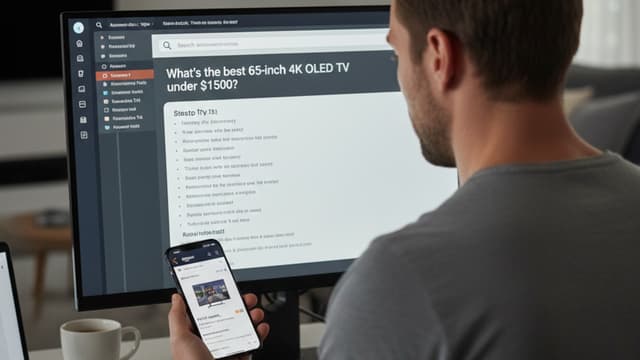
Agentic Commerce: Why AI is Winning the Search War but Losing the Checkout Battle
Consumers have rapidly embraced AI as their go-to research tool. In online shopping, it remains just that: a trusted guide for options, not the best price.
In February 2026, German digital signage and retail tech publication invidis published a sharp analysis of the current state of agentic commerce -- the concept of AI agents autonomously conducting purchasing on behalf of consumers. The author is Roi Iglesias, partner at invidis impact.
The article's conclusion is clear: while AI has been embraced by consumers in the "search and research phase," it faces a psychological barrier in the "checkout (purchase completion)" phase. The future that tech companies envision -- where AI autonomously shops on our behalf -- has yet to clear the most fundamental hurdle: consumer trust.
Background and Industry Trends
Agentic commerce has become the biggest buzzword in the e-commerce industry from late 2025 through 2026. Bain & Company predicts the US agentic commerce market will reach $300-500 billion by 2030, accounting for 15-25% of online retail sales.
Activity on the supply side is accelerating. According to Salesforce's "State of Sales" report, 9 out of 10 sales teams plan to leverage AI agents to meet their 2026 targets. Infrastructure development is advancing rapidly, including Google's UCP (Universal Commerce Protocol), Shopify's MCP server, and Mastercard's Agent Pay authentication.
However, the reality on the demand side diverges significantly from this optimism. A separate Bain & Company survey shows that approximately 50% of consumers are "cautious" about autonomous purchasing by AI agents. While technology is becoming ready, consumer psychology has not caught up.
"58% vs. 17%" -- Data Reveals the Disconnect Between Search and Purchase
The numbers that clearly demonstrate this gap come from ChannelEngine's "Marketplace Shopping Behavior Report 2026". The survey of 4,500 marketplace users across the US, UK, France, Germany, and the Netherlands revealed the following:
- 58% of consumers use AI tools for product research
- 37% have initiated a purchase process through an AI assistant
- However, only 17% feel comfortable completing a purchase through AI
In other words, there is a 41-point gap between consumers who use AI as a "research tool" and those willing to "trust AI with their wallet." The invidis article cites an AI agent conversion rate of approximately 2% (a figure derived from OpenAI's early research), concluding this is "not a technical failure, but a trust deficit."
Even more concerning is the finding that even when AI presents "perfect" recommendations, 95% of consumers still perform at least one manual verification. They check third-party reviews, visit official brand websites, and cross-compare prices. The time AI saves in research is consumed right back by "verification work."
Zero-Click Search and "Verification Tax" -- Two Structural Challenges
Two structural challenges in the invidis analysis deserve particular attention.
The first challenge is the surge in "zero-click searches." According to a Bain & Company report, approximately 60% of all searches are "zero-click" -- users get their answers from AI summaries without visiting retail sites. 80% of consumers rely on zero-click results for more than 40% of their searches. As a result, organic traffic to retail sites has decreased by an estimated 15-25%.
Consumers are using AI not "to buy" but as a "noise filter." The more the supply side strengthens marketing through AI agents, the more consumers use AI to block that very marketing -- creating an ironic feedback loop.
The second challenge is the "Verification Tax." This is a concept coined by the invidis article: for every minute AI saves in research, consumers spend another minute verifying to prevent erroneous purchases caused by hallucination (AI misinformation). This mirrors the case of Amazon's "Just Walk Out" technology, which, despite being technically successful, scaled back its own-store deployment and pivoted to a B2B model due to consumers' unease about the "absence of a visible transaction moment."
Removing friction does not necessarily build trust. By eliminating the friction of "choosing," the friction of "trusting" increases -- a paradox.
Impact on E-Commerce Businesses and Practical Applications
The actions e-commerce businesses should take from this analysis are clear.
First, it is important to position AI as "purchase support" rather than "purchase proxy." As the ChannelEngine report shows, consumers are in a "Confidence Economy." 53% of consumers compare the same product across multiple marketplaces, browsing an average of three platforms before making a purchase decision. Three out of five hesitate to buy products without reviews. For AI agents to earn trust, they need to be designed not to replace consumers' verification processes but to "support" them.
Next, addressing zero-click search is urgent. Traditional SEO strategies alone will only accelerate the state where AI summaries capture information and traffic fails to flow in. It is time to consider structuring proprietary data, publishing APIs for AI agents, and supporting protocols such as MCP and Google's UCP.
Furthermore, embedding "verifiability" into the product experience is the key to differentiation. According to RealityMine, 48% of consumers cite "being able to review and approve AI actions in advance" as a condition for trust. 44% want "ease of opting out," and 41% want "the ability to override or reverse AI decisions." Presenting a transparent decision-making process is a direct measure for improving conversion.
Summary
The real challenge for agentic commerce in 2026 lies not in the accuracy of technology but in consumer psychology. The "glass ceiling of a 2% conversion rate" pointed out by the invidis article is a barrier that will not be broken until AI can provide "psychological closure" equivalent to human interaction or traditional checkout.
Going forward, the key area to watch is how approaches to breaking this psychological barrier will evolve. Mastercard's authenticated AI agents, Google's standardized commerce protocol through UCP, and ChannelEngine's "Confidence Economy" response. Whether these efforts can reduce the "Verification Tax" and convert search victories into checkout victories will determine the pace of agentic commerce adoption.
Related Articles

The Wide Gap Between AI Bot 'Shopping' and 'Payments' — Where Agentic Commerce Stands Today
AI bots excel at product search and comparison but a significant gap remains before autonomous payment completion. Visa, Mastercard, and Google compete with proprietary protocols as industry standards proliferate. E-commerce operators should begin evaluating agent support as a new customer channel.
Forrester Analysis: Closing the Trust Gap Is Key to Agentic Commerce's Next Phase
Forrester identifies three 'trust frontiers' in agentic commerce. Only 17-24% of consumers trust AI purchases, and EC operators must start building data quality and incremental trust now
2026: The Year of Zero-Click Buying -- How AI Agents Are Transforming Shopping
Forrester proposes 'zero-click buying' where AI automatically purchases without clicking buttons. Gartner predicts 40% of enterprise apps will feature AI agents by end of 2026. EC businesses urgently need 'agent optimization' strategies to be chosen by AI.
Tags
Share this article