
Retail Media's Easy Money Era Is Over – Measurement and Technology Investment Define the $100B+ Market

Akihiro Suzuki
Twitter
Source: www.beet.tv
Key Takeaways
- Retail media is growing toward $312B globally, but supplier budget-driven growth is hitting its limits
- Advertisers' overreliance on ROAS is creating a "ROAS Trap" that hinders upper-funnel expansion
- E-commerce brands urgently need to build measurement infrastructure centered on incremental ROAS (iROAS)
Retail Media Reaches a Growth Inflection Point
Retail Media's Easy Money Is Gone - Now Comes the Hard Part
As retail media grows into a $100 billion-plus market, the era of easy expansion is over. Retailers face a critical choice: invest in real measurement and technology, or risk losing ground to more sophisticated competitors.
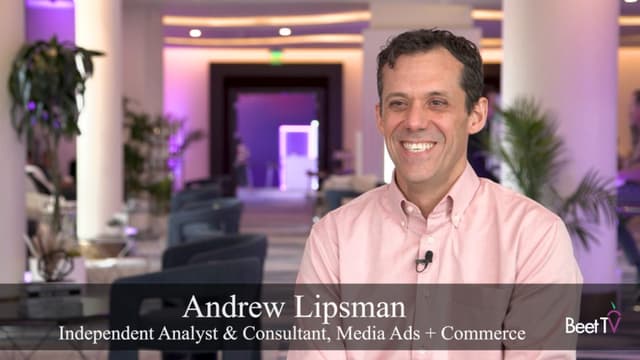
On February 22, 2026, industry media outlet Beet.TV published an analysis based on CES 2026 interviews. Independent analyst Andrew Lipsman stated plainly that "retail media's easy money era is over," identifying that the industry has entered a phase demanding serious investment in measurement technology and infrastructure.
According to Forrester's latest forecast, global retail media spending is projected to grow from $184 billion in 2025 to $312 billion by 2030, at a compound annual growth rate of 11%. By 2030, retail media will reach twice the size of TV advertising spend, becoming the largest paid media investment category. However, structural challenges lurk beneath these growth projections.
Industry Trends
Retail media refers to the practice of retailers monetizing customer touchpoints — their e-commerce sites, stores, and apps — as advertising media. It has grown rapidly alongside e-commerce expansion as an advertising channel capable of precise targeting based on purchase data.
Growth to date has been primarily fueled by the digital shift of suppliers' (manufacturers') "trade marketing budgets." The movement to redirect budgets previously allocated to in-store promotions toward retail media accelerated, enabling retailers to accumulate advertising revenue with relative ease.
However, Lipsman warns that "supplier budgets are reaching their limits." Manufacturers are voicing that "there's no more room to increase retail media spending," and the traditional budget-shifting model alone can no longer sustain growth.
Market concentration is also intensifying in the U.S. According to eMarketer's forecast, Amazon Ads and Walmart Connect are projected to capture 89% of incremental retail media spending between 2025 and 2026. Amazon Ads holds a 79.7% market share, Walmart Connect 8.0%, with the third-place Target Roundel (1.5%) far behind.
The "ROAS Trap" and the Measurement Wall
Lipsman is particularly concerned about what he calls the "ROAS Trap." When retail media networks (RMNs) attempt to expand into offsite advertising, particularly CTV (Connected TV), the traditional overreliance on ROAS (Return on Ad Spend) as an evaluation metric becomes a barrier.
Upper-funnel inventory (awareness and interest) like CTV comes with higher CPMs (cost per thousand impressions). When evaluated by ROAS, these channels underperform because they generate fewer direct purchase conversions. Advertisers push back, saying "there's no reason to pay a higher CPM through an RMN for the same audience."
Lipsman's proposed solution is a shift to "iROAS (incremental ROAS)." iROAS excludes conversions that would have occurred without advertising, measuring only the pure incremental sales generated by ads. Traditional ROAS shows high numbers for brand search ads and retargeting — advertising to "customers who would have purchased anyway" — while the actual contribution to new sales is often small. iROAS separates "apparent effectiveness" from "true effectiveness."
IAB Europe also released the second edition of retail media measurement standards in January 2026, promoting industry standardization. However, as advertisers use an average of 6 RMNs, projected to reach 11 by the end of 2026, the inability to compare performance data across networks persists. According to Skai's research, only 15% of advertisers "strongly trust" their own measurement.
CTV Expansion and Becoming a "Real Media Company"
The next growth frontier attracting attention is the expansion of offsite advertising centered on CTV (Connected TV).
Amazon has built a system providing access to approximately 50% of the premium CTV market through its DSP (Demand-Side Platform). Through its partnership with Roku, it can reach 80% of U.S. CTV households and has direct access to Disney+, ESPN, and Hulu inventory. In initial tests, advertisers reached 40% more unique viewers without changing their budgets and reduced ad duplication by 30%.
Walmart, on the other hand, is seeing its $2.2 billion acquisition of Vizio, completed in December 2024, begin to fully operate. Walmart Connect's global advertising revenue grew 46% year-over-year including Vizio, and CTV has become the fastest-growing area within Walmart Connect. Plans are also advancing to deploy Vizio's OS on Walmart's private-label Onn TV line, which if realized would create a proprietary CTV ecosystem reaching one-quarter to one-third of U.S. households.
Lipsman positions this movement as the arrival of "Performance TV." Combining narrow targeting with closed-loop attribution (completing effectiveness measurement based on purchase data), he calls it "the big innovation that has long been described as inevitable," stating that CMOs can no longer ignore this change.
However, he also emphasizes the need for retail media networks to "behave like real media companies." National brand advertising budgets have traditionally flowed to Meta and Google. Capturing those budgets requires breaking free from supplier dependence and developing sophisticated media-buying execution capabilities.
Impact on E-Commerce Brands and How to Act
The retail media inflection point holds several practical implications for e-commerce brands.
First, "reassessing advertising evaluation criteria" is required. Measurement should be anchored not just on ROAS but on iROAS (incremental ROAS). Simply chasing ROAS numbers through brand search ads and retargeting risks overestimating sales that would have occurred without advertising. Building a framework that incorporates A/B testing and incrementality analysis to capture pure incremental sales from advertising is critical.
Second, "optimizing multi-RMN operations" should be considered. In an era where advertisers use an average of 6 RMNs, the lack of unified data formats and measurement standards across networks is a significant challenge. Consider adopting integrated dashboards and cross-network analytics tools.
Furthermore, "bringing CTV advertising into view" is also important. As Amazon and Walmart's CTV inventory expands, precisely targeted video advertising linked to purchase data is becoming increasingly viable. For brands seeking upper-funnel awareness expansion, CTV advertising through retail media represents a compelling option.
Summary
Retail media has grown into a massive market exceeding $100 billion, but the era of "easy growth" through supplier budget shifts is ending. Future growth will be determined by the sophistication of measurement technology centered on iROAS, expansion into offsite channels like CTV, and execution capability as a media company.
As the Amazon-Walmart duopoly leads in CTV and data integration, smaller retail media networks need to accelerate their differentiation strategies. E-commerce brands should view this structural shift as an "opportunity to reassess their advertising investments" and begin building measurement infrastructure and redesigning channel strategies now.
Related Articles

Criteo Launches Product Recommendation API 'Agentic Commerce Recommendation Service' for AI Shopping Assistants — 60% Relevancy Improvement Over Text-Based Matching
Criteo announces AI shopping assistant product recommendation API delivered via Model Context Protocol. Achieves up to 60% relevancy improvement over traditional text-based recommendations by leveraging purchase behavior data

Walmart's Agentic Commerce Vision: Four Pillars and Less Scrolling Shopping
Walmart launches AI-driven agentic commerce strategy. Partnering with Google and OpenAI to lead conversational shopping standards with four pillars: practicality, personalization, immersion, and anticipatory commerce.
Amazon vs Walmart: Contrasting Strategies in Agentic Commerce
Walmart adopts Google UCP and promotes open standards. Amazon maintains proprietary systems with a closed approach. How these choices will shape the market's future.
Tags
Share this article