
Criteo Launches Product Recommendation API 'Agentic Commerce Recommendation Service' for AI Shopping Assistants — 60% Relevancy Improvement Over Text-Based Matching

Akihiro Suzuki
Twitter
Source: ppc.land
Key Takeaways
- Criteo launches product recommendation API for AI shopping assistants leveraging purchase behavior data
- Achieves up to 60% relevancy improvement compared to text-based recommendations
- E-commerce operators can integrate their products into AI assistant recommendations via MCP
Criteo Announces Agentic Commerce Recommendation Service
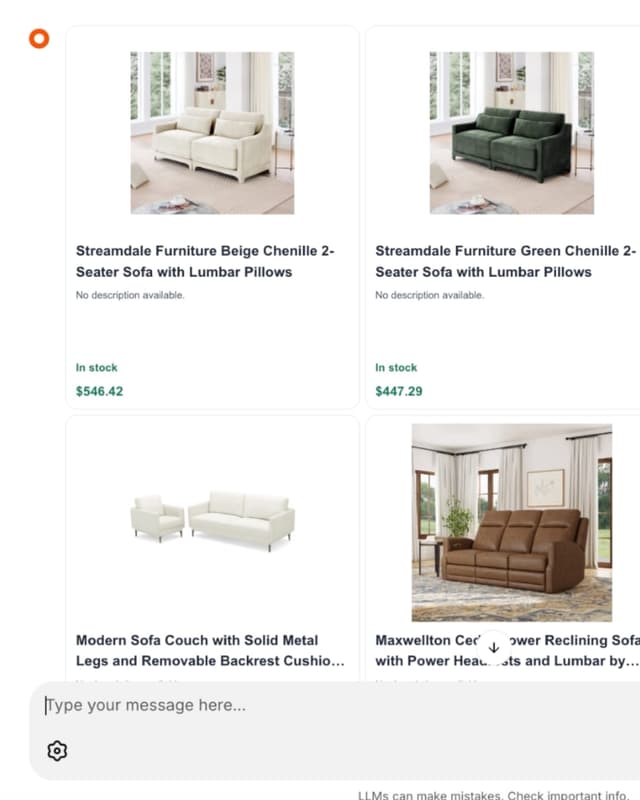
Criteo's AI shopping service outperforms text-based rivals by 60% as commerce data trumps semantic matching
Criteo introduces commerce-grade recommendation infrastructure for AI shopping assistants, achieving 60% relevancy gains through transaction data versus product descriptions alone.
On February 5, 2026, commerce media giant Criteo (NASDAQ: CRTO) announced the "Agentic Commerce Recommendation Service," a product recommendation API for AI shopping assistants. This service achieves up to 60% improvement in recommendation relevancy by leveraging actual purchase behavior data rather than traditional text-based product matching.
The service is delivered through Model Context Protocol (MCP), directly connecting AI shopping assistants with e-commerce operators' product inventory. Criteo CEO Michael Komasinski stated, "The real competitive advantage in agentic commerce will come from access to high-quality commerce data at scale."
Background and Industry Trends
"Agentic commerce" — where AI agents transform consumer purchasing behavior — has become the biggest theme in the e-commerce industry for 2026. McKinsey predicts that AI agent-mediated shopping will grow to $900 billion to $1 trillion in U.S. retail sales by 2030.
In response to this trend, major tech companies are accelerating the development of agentic commerce infrastructure. At NRF (National Retail Federation) in January 2026, Google announced the "Universal Commerce Protocol (UCP)" jointly with Shopify, with over 20 partners including Walmart, Target, Etsy, and Wayfair participating. OpenAI has also launched the "Agentic Commerce Protocol (ACP)," and Shopify has enabled direct purchases on ChatGPT and Perplexity through Agentic Storefronts.
Against this backdrop, Criteo is seeking to establish a unique position from the perspective of "recommendation quality." Most current AI assistants rely on text matching of product descriptions, facing the challenge of being unable to distinguish between "products consumers actually want to buy" and "products that merely have similar text."
How the CLEPR Model and Two-Stage Architecture Work
At the core of Criteo's recommendation service is the proprietary "CLEPR (Contrastive Language Embedding for Product Retrieval)" model and a two-stage architecture.
Stage 1: Product Retrieval uses the CLEPR model, a 120-million parameter bi-encoder, to compute embedding vectors for user queries and product catalogs separately, extracting candidate products through K-nearest neighbor search. CLEPR achieves an average 37% improvement in "outcome-based relevancy" compared to open-source text encoders from Google, Microsoft, Meta, and Alibaba.
Stage 2: Re-ranking reorders the candidate products obtained from retrieval using not only query relevance but also purchase data such as "PSales probability" (the probability of a product being sold within the past 7 days). This stage achieves the 60% relevancy improvement compared to text-based approaches.
The crucial point here is that "semantic accuracy" and "outcome-based relevancy" are fundamentally different. Text matching may achieve high similarity in product descriptions, but that doesn't mean consumers will actually purchase those products. Criteo bridges this gap with commerce data at scale: 720 million daily active shoppers, $1 trillion in annual transactions, and 4.5 billion SKUs.
Impact on E-Commerce Operators and How to Use It
The impact of this service on e-commerce operators can be organized from three main perspectives.
As a new sales channel through AI assistants, there's the potential to expose your products to MCP-compatible AI shopping assistants. Criteo's network includes 17,000 e-commerce sites and 200 global retail partners, with partnerships with 70% of the top 30 U.S. retailers.
Regarding improved recommendation quality based on purchase data, the era when SEO optimization of product descriptions alone was sufficient is coming to an end. Since actual purchase signals are reflected in recommendations, factors like product popularity, inventory status, and user intent will influence recommendation rankings.
Points to note for future response also exist. Currently, the service is in testing stages with major LLM platforms, and no specific timeline for general availability has been announced. Additionally, since Criteo's CLEPR model is trained only on organic click data and doesn't include purchase bias from sales events, the end-to-end conversion improvement effects will need future verification.
Summary
Criteo's "Agentic Commerce Recommendation Service" provides an important piece for the agentic commerce era — enhancing AI shopping assistant recommendation quality through purchase data. While Google's UCP and OpenAI's ACP handle "standardization of connections," Criteo is seeking differentiation on a different layer: "recommendation quality."
Key areas to watch going forward include the timing of formal integration with major LLM platforms and the results of effectiveness verification based on actual conversion data. E-commerce operators need to closely monitor developments in "commerce data infrastructure" that will affect the quality of recommendations when their products are recommended through AI assistants.
Related Articles

What is Agentic Commerce? Explaining the New Era of AI-Powered Purchasing
Explore the full scope of Agentic Commerce. AI agents autonomously execute everything from product selection to payment on behalf of users. Discover shocking data including 4,700% increase in AI-driven traffic and 20% of Walmart's traffic from ChatGPT, along with three essential preparation steps companies should start immediately.

Google Announces Universal Commerce Protocol (UCP), Forms Major Coalition for Agentic Commerce Standardization
Google unveiled UCP at NRF 2026, an open standard co-developed with Shopify, Walmart, and 20+ partners to standardize AI agent-powered shopping experiences.
Shopify Partners with Both Google and Microsoft for Agentic Commerce, Pursues All-Encompassing Strategy
Shopify co-develops Google's UCP while also integrating with Microsoft Copilot Checkout. Building a 'buy from any AI' environment as an e-commerce platform.
Tags
Share this article