
Temu Parent PDD Misses Revenue Estimates — Bets 100 Billion Yuan on In-House Brands to Pivot Away from Ultra-Low-Price E-Commerce

Akihiro Suzuki
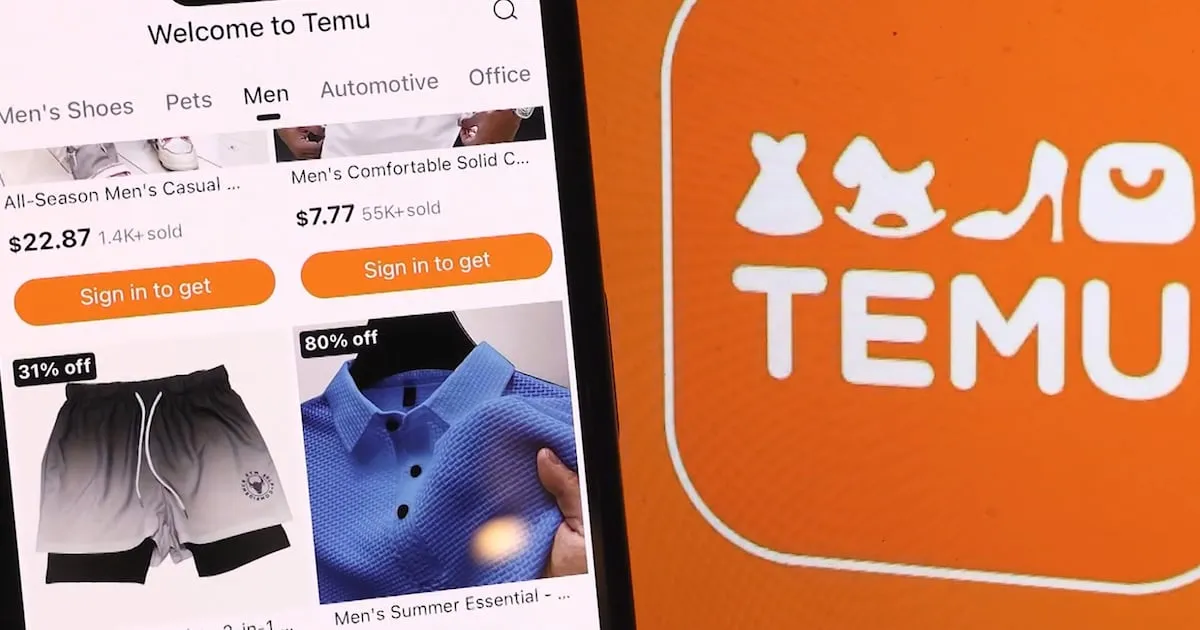
Source: www.bnnbloomberg.ca
Key Takeaways
- PDD Holdings' Q4 2025 revenue fell short of market estimates, with net income declining 11% year-over-year
- A triple threat of weak Chinese consumer spending, tightening cross-border e-commerce regulations, and intensifying competition exposes the limits of the business model
- E-commerce businesses must prepare for the end of "lowest-price-wins" competition by strengthening brand building and regulatory compliance
PDD Holdings Misses Quarterly Revenue Estimates

Temu-owner PDD misses quarterly revenue estimates
Discount e-commerce company PDD Holdings missed market estimates for quarterly revenue on Wednesday, as subdued consumer spending weighed on its Chinese platform, Pinduoduo, overshadowing robust growth at its overseas marketplace Temu.
On March 25, 2026, PDD Holdings, the operator of Temu, reported its Q4 2025 (October-December) earnings. Revenue came in at 123.92 billion yuan (approximately $17.96 billion), falling short of analyst estimates of 124.4 billion yuan. Net income declined 11% year-over-year to 24.5 billion yuan, and adjusted EPS of 17.69 yuan significantly missed market expectations of 22.34 yuan.
Breaking down the revenue, online marketing service revenue grew just 5% year-over-year to $85.8 billion, while transaction service revenue (including Temu commissions) grew a solid 19% to $91.4 billion. However, rising fulfillment costs and server costs drove total costs up 15%, squeezing profit margins.
A Triple Threat Exposes the Limits of the Business Model
PDD's deteriorating performance stems from three converging structural factors.
First, weak consumer spending in China. Pinduoduo, once favored by price-sensitive consumers, is seeing growth slow even for discount platforms as economic recovery lags and household confidence wanes. Full-year revenue growth was just 10%, and non-GAAP net income fell 12% year-over-year to 107.3 billion yuan.
Second, tightening regulations on cross-border e-commerce across multiple countries. The EU has decided to impose a flat 3-euro customs fee on small-value imports under 150 euros starting July 2026. By taxing previously duty-free small parcels, the price advantage of Temu and Shein will be eroded. Furthermore, in the United States, discussions on reforming the de minimis (duty-free threshold) system are advancing, with senators demanding federal investigations into intellectual property infringement and counterfeit goods, adding political pressure.
Third, internal investigations by Chinese authorities. According to Bloomberg's reporting, Beijing has expanded its investigation into PDD's accounting and tax practices, reportedly triggered by a clash between employees and regulators in December 2025.
The Full Picture of "Xinpinmu" — PDD's 100 Billion Yuan In-House Brand Strategy
Against these headwinds, PDD has made an aggressive move. On the same day as the earnings release, March 25, PDD officially announced the establishment of "Xinpinmu," a new entity dedicated to building in-house brands. Headquartered in Shanghai with an initial investment of 15 billion yuan, the plan calls for a total investment of 100 billion yuan (approximately $14.5 billion) over the next three years.
Xinpinmu's business scope is wide-ranging. First, it will develop "in-house brands" that span markets and categories by combining Pinduoduo's domestic supply chain with Temu's overseas distribution network. Additionally, it will offer a comprehensive "overseas expansion support service" for manufacturers in China's industrial belts (manufacturing clusters), providing custom manufacturing, quality standard development, warehousing and logistics, intellectual property protection, legal support, and regulatory compliance assistance.
This strategy signifies more than just a brand investment — it represents a fundamental transformation of PDD's business model. The shift moves from "lowest-price matching" to "balancing quality and price" through vertical supply chain integration. AliExpress is similarly shifting from unbranded goods toward manufacturers and branded products, aligning with the broader trend across Chinese cross-border e-commerce.
Co-Chairman and Co-CEO Jiazhen Zhao positioned 2026 as "the beginning of the next decade" and indicated plans to commit large-scale resources to supply chain investment and ecosystem-wide support.
Impact and Practical Implications for E-Commerce Businesses
PDD's deteriorating performance and strategic pivot hold three important implications for e-commerce businesses.
Monitor the changing cross-border e-commerce competitive landscape. The fact that Temu's ultra-low-price model is hitting regulatory and profitability walls suggests the end of the "win on price alone" era. For businesses that have suffered from Temu's price disruption, the competitive environment may begin to ease. However, if PDD pivots to competing on quality with in-house brands, vigilance against this new form of competition is warranted.
Regulatory compliance is urgently needed. The EU's de minimis elimination takes effect in July 2026. Cross-border e-commerce operators need to urgently determine whether to reflect increased customs costs in pricing or absorb costs through local warehousing. Temu has already established local warehouse models, partially positioning itself to avoid the impact of regulatory changes.
Supply chain transparency and quality management become differentiators. Behind PDD's serious investment in intellectual property protection and quality standard development through Xinpinmu lies the risk of penalties amounting to up to 6% of global revenue for violations of the EU's Digital Services Act (DSA). Eliminating products that fail to meet safety standards is a challenge directly tied to platform credibility.
Summary
PDD's earnings clearly signal the "end of the hyper-growth era." Stagnating revenue and declining margins raise fundamental questions about the sustainability of the ultra-low-price model. At the same time, the 100 billion yuan in-house brand investment demonstrates that PDD has no intention of settling for the status quo.
Three areas demand attention going forward. First, when Xinpinmu's specific brand lineup and target markets will be revealed. Second, the impact on Temu's pricing strategy and revenue after the EU de minimis tariff takes effect. Third, the extent to which Chinese government investigations will affect PDD's business operations. Temu's monthly active users remain among the world's largest, but whether it can overcome the triple challenge of regulation, competition, and profitability will be the defining question of the second half of 2026.
Related Articles

TikTok Shop Projected to Become a Top-Three Global Retailer by 2030, Surpassing Walmart
Flywheel report predicts TikTok Shop parent ByteDance could become the world's third-largest retailer by 2030 with $1 trillion in annual sales, reshaping global e-commerce hierarchy.

China Regulates Algorithmic Pricing in E-Commerce: New Rules Take Effect April 2026
China announces the 'Internet Platform Pricing Conduct Rules,' banning algorithmic price discrimination and 'lowest price' mandates. This regulation is drawing attention as a model case for establishing fair competition rules in the global e-commerce market.

DTC Brand Quince Raises $500M at $10B Valuation — The Manufacturer-to-Consumer Model Disrupting E-Commerce
Quince raises $500M in Series E at $10.1B valuation. How the factory-direct M2C model is reshaping the e-commerce industry.
Tags
Share this article