
EC & AI Commerce News Digest (March 23, 2026)

Akihiro Suzuki

Source: deloitte.wsj.com
Key Takeaways
- Google adds Cart and Catalog capabilities to UCP, accelerating AI shopping standardization
- OpenAI pivots shopping strategy as retailer responses and challenges come into focus
- Agentic commerce wave expands across payments, security, and luxury sectors
Today's Top Story
Google Adds Cart and Catalog to Universal Commerce Protocol — Major Upgrade to AI Shopping Infrastructure

Universal Commerce Protocol updates improve AI shopping for everyone
Universal Commerce Protocol (UCP) releases new capabilities, and Google shares a vision for a connected commerce ecosystem powered by AI.
On March 19, Google announced a major update to its open standard "Universal Commerce Protocol (UCP)." Two new capabilities — Cart (cart operations) and Catalog (product catalog browsing) — have been added, enabling AI agents to autonomously execute the entire flow from product search to purchase completion.
UCP is the open standard for agentic commerce proposed by Google in 2025, providing a protocol for AI agents to interact with retailer systems in a standardized way. With this update, agents can now search and browse product catalogs, add, update, and remove items from carts, and complete checkout — all through unified specifications. According to Search Engine Land, major players including Shopify, PayPal, Ramp, and Checkout.com have already committed to adopting UCP.
In the proliferation of agentic commerce, establishing industry-wide standard protocols is one of the most critical foundations. The coordinated push by Google, Shopify, and payment companies to advance UCP indicates that AI shopping is transitioning from the experimental phase to the implementation phase.
Full article: Google Adds Cart & Catalog to UCP — AI Agent "Shopping Experience" Gets Real
OpenAI's Shopping Agent Stumbles, Pivots Strategy — Retailer Responses Revealed

OpenAI's first try at agentic shopping stumbled. It's trying again
Etsy, Walmart and Shopify were quick to jump into Instant Checkout, but item information was often wrong.
On March 20, CNBC published a comprehensive analysis of OpenAI's shopping agent strategy pivot. According to CNBC, Etsy, Walmart, and Shopify initially jumped into Instant Checkout, but inaccurate product information and inventory data inconsistencies became serious problems, significantly reducing conversion rates.
As PYMNTS also reported, OpenAI is pivoting from the instant checkout model to an in-app model. Walmart is shifting toward embedding its own AI chatbot into ChatGPT, while Amazon is developing its own agentic shopping capabilities.
This development signals the intensification of the battle over "who controls the checkout experience" in AI commerce. The power balance between platform providers and retailers will significantly shape the future direction of agentic commerce.
Full article: OpenAI Ends Instant Checkout, Pivots to Retail App Integration Model
Agentic Commerce
Deloitte x WSJ: "When AI Becomes the Buyer" — Agentic Commerce Reshaping Retail

When AI Becomes the Buyer: How Agentic Commerce is Reshaping Retail
As AI agents play a bigger role in the path to purchase, retailers anticipate shifting strategies to address the next big evolution in online shopping.
A joint report by Deloitte and WSJ analyzes how AI agents are beginning to play a leading role in the purchasing process. The report notes that retailers need to build new strategies not just for consumer-facing marketing, but for being "chosen" by AI agents.
The report suggests that agentic commerce represents the next major evolution in online shopping, with the potential to reconstruct the entire purchase funnel from product discovery to checkout. For retailers, organizing and structuring data for AI agents has become an urgent priority.
Forrester: When AI Commerce Goes Wrong, Many Consumers Blame the AI Engine
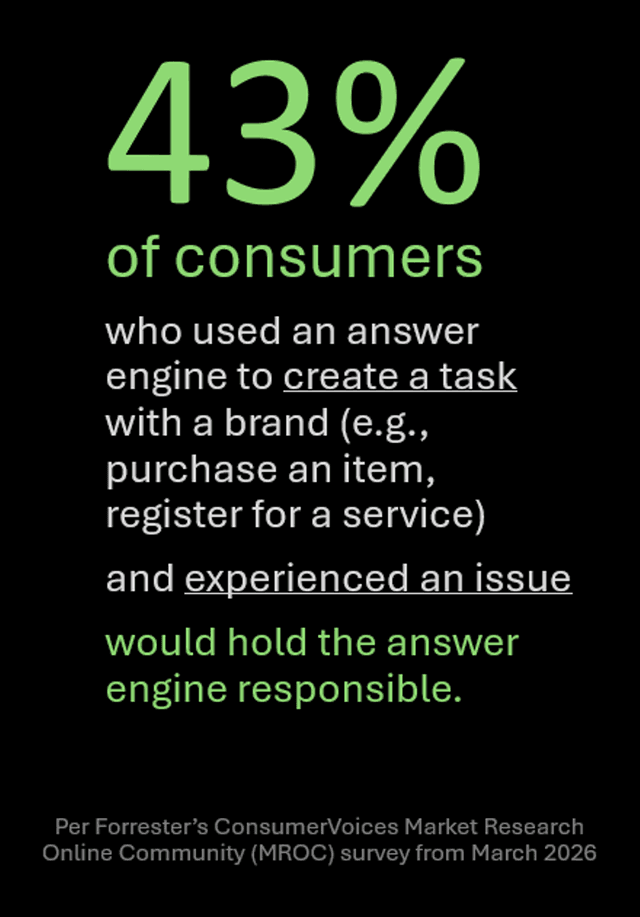
When Things Go Wrong With A Commerce Task, Many Consumers Will Blame The Answer Engine
Consumers say they would hold the answer engine responsible if they encountered a problem with a commerce task an AI agent performed on their behalf.
Forrester's latest research reveals that when problems occur with purchasing tasks performed by AI agents, most consumers hold the AI engine (such as ChatGPT or Google) responsible.
These findings carry important implications for AI commerce platforms. As agentic commerce proliferates, brand credibility becomes directly tied to AI agent accuracy. Building mechanisms to minimize brand damage when purchasing errors or inappropriate recommendations occur has become essential.
Jing Daily: When the Algorithm Decides — Agentic AI Challenges Luxury Brands

When the algorithm decides: How agentic AI is challenging luxury brands
AI-powered systems are making purchasing decisions before consumers ever browse a catalog.
Jing Daily analyzes the unique challenges that AI agents pose to luxury brands. When AI makes purchasing decisions on behalf of consumers, there are concerns that luxury-specific values such as brand storytelling and world-building may not be effectively communicated.
The luxury industry has differentiated itself through in-store experiences and branding, but in the age of agentic commerce, AI may prioritize quantitative data such as price, specifications, and reviews. How luxury brands maintain brand value in the AI era has become a critical industry challenge.
Full article: When the Algorithm Decides — The "Misperception" Risk Agentic AI Poses to Luxury Brands
Kingfisher Powers Agentic Commerce with Google Cloud AI — DIY Retail's "Product to Project" Transformation

How Kingfisher Powers Agentic Commerce with Google Cloud AI
Kingfisher and Google Cloud have entered into a partnership to bring agentic AI experiences to the DIY and home improvement retail sector.
European DIY giant Kingfisher (parent company of B&Q, Castorama, and others) has partnered with Google Cloud AI to implement agentic commerce. The company is shifting from the traditional "product search to purchase" flow to an experience where "AI supports the entire renovation project."
Specifically, the system is being built so that when a customer simply says "bathroom renovation," the AI suggests all necessary materials, tools, and procedures, enabling one-click purchasing. This stands out as a concrete implementation case of agentic commerce.
Payments & Fintech
Stripe Announces AI Payments Protocol — Dawn of the Machine-to-Machine Commerce Era

Stripe's AI Payments Protocol Signals Machine-To-Machine Commerce Era
Stripe's Machine Payments Protocol lets AI agents pay for services directly—Twilio was the first to integrate, and it won't be the last.
According to Forbes, Stripe's newly announced "Machine Payments Protocol" enables AI agents to directly pay for services. Twilio became the first integration partner.
Traditional payments all required human approval, but this protocol makes M2M (machine-to-machine) commerce a reality, where AI agents autonomously complete transactions and payments. If Google's UCP standardizes the "front end," Stripe's MPP can be seen as standardizing the "back end" of payments.
Full article: Stripe Announces "Machine Payments Protocol" — The Era of Autonomous AI Agent Payments Begins
PayPal Builds "Plug-and-Play" Agentic AI Platform
PayPal builds 'plug-and-play' agentic AI platform
PayPal is building an agentic AI platform that allows consumers to buy products without navigating traditional checkout flows.
According to FinAi News, PayPal is building a "plug-and-play" platform that enables AI agents to complete purchases without going through traditional checkout flows.
Following Visa (Agentic Ready Program), Stripe (Machine Payments Protocol), and Mastercard, PayPal has now fully committed to agentic commerce capabilities. With all major payment players advancing AI agent support, this signals the rapid progress of agentic commerce infrastructure development.
Full article: PayPal Partners with NVIDIA to Build "Plug-and-Play" Agentic AI Platform
Ant International: "Trusted FinAI" as Growth Engine for Agentic Commerce
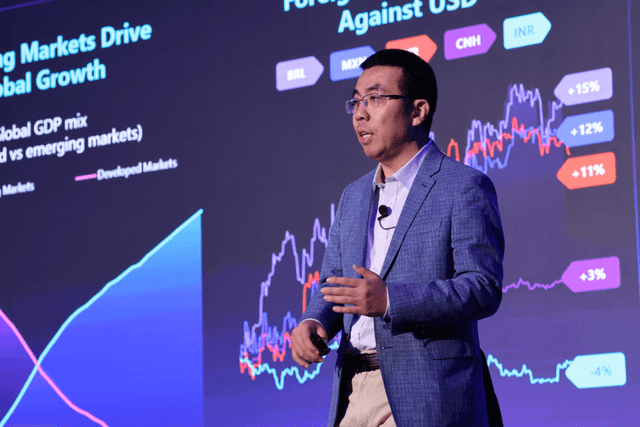
Ant International: Trusted FinAI is a key growth engine for agentic commerce
Behind the scenes, the technology infrastructure landscape is also rapidly shifting to support these new AI-powered shopping experiences.
Alibaba-owned Ant International has announced its "Trusted FinAI" initiative to ensure trust in AI agent payments. The company argues that the growth of agentic commerce requires guaranteed safety and reliability of AI agent payments, and plans to develop fintech infrastructure for the Asian market.
It is noteworthy that Asian fintech companies, in addition to Western players (Visa, Stripe, PayPal), are also racing to support agentic commerce.
Security
Palo Alto Networks Unit 42: Retail Fraud Risk in the Age of AI Agents

Who's Really Shopping? Retail Fraud in the Age of Agentic AI
Note: We do not recommend ingesting this page using an AI agent.
Palo Alto Networks' threat analysis team Unit 42 has published a report analyzing how agentic AI could fundamentally change retail fraud methods. In an era where AI agents handle purchases on behalf of consumers, verifying "who is really shopping" becomes increasingly difficult.
The report presents risk scenarios including mass order fraud, impersonation purchases, and promotional abuse using AI agents. As a security challenge inseparable from the proliferation of agentic commerce, this serves as an important warning for e-commerce operators.
Full article: Palo Alto Networks Unit 42 Warns of Specific AI Agent-Powered Retail Fraud Scenarios
Corporate Developments & Partnerships
Reddit x Pacvue Partnership: Expanding Presence in Retail Media and AI Commerce

Reddit inks deal with Pacvue, highlighting its growing role in retail media and AI commerce
An integration with Reddit and Pacvue plugs Reddit into more than 100 networks and marketplaces that advertisers can manage through the platform.
According to eMarketer, Reddit has partnered with retail media platform Pacvue, connecting to over 100 advertising networks and marketplaces.
This partnership gives Reddit a substantial retail media advertising revenue stream while strengthening its position as a source of user-generated content (reviews and recommendations) in AI commerce. Reddit's word-of-mouth data could become a critical information source when AI agents make purchasing decisions.
Alibaba Targets $100B in AI and Cloud Revenue Over 5 Years — Vision for the Agentic Era
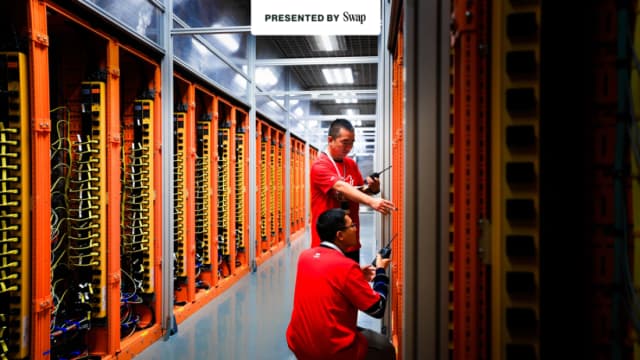
Alibaba targets $100B in AI and cloud revenue over 5 years
During its latest quarterly earnings report on Thursday, Alibaba disclosed aggregate capital expenditure estimates for its AI and cloud infrastructure business.
According to Modern Retail, Alibaba revealed in its latest quarterly earnings that it plans to invest $100B in AI and cloud infrastructure over the next five years. The cloud division recorded 36% year-over-year growth.
Amid slowing e-commerce growth, Alibaba is positioning AI and cloud as its growth engine for the agentic era. Combined with its recently announced agentic AI tool "Wukong," the company is accelerating AI transformation across its entire platform.
Global E-Commerce Trends
Paris Appeals Court Rejects French Government Bid to Suspend Shein
Paris appeals court rejects French govenment bid to suspend Shein
A Paris appeals court on Thursday rejected a bid by the French government to suspend the activities of Chinese-founded fast fashion giant Shein in France.
According to France 24, the Paris Appeals Court rejected the French government's request to suspend Shein's operations. The government had sought the suspension claiming Shein's business model violated environmental and labor standards, but the court ruled the legal basis was insufficient.
While the EU continues to strengthen regulations on Chinese e-commerce companies, the judiciary has shown a more cautious stance. How to regulate cross-border e-commerce companies like Shein remains a key policy issue in Europe.
Sally Beauty Launches on TikTok Shop — Major Beauty Retailer Enters Social Commerce
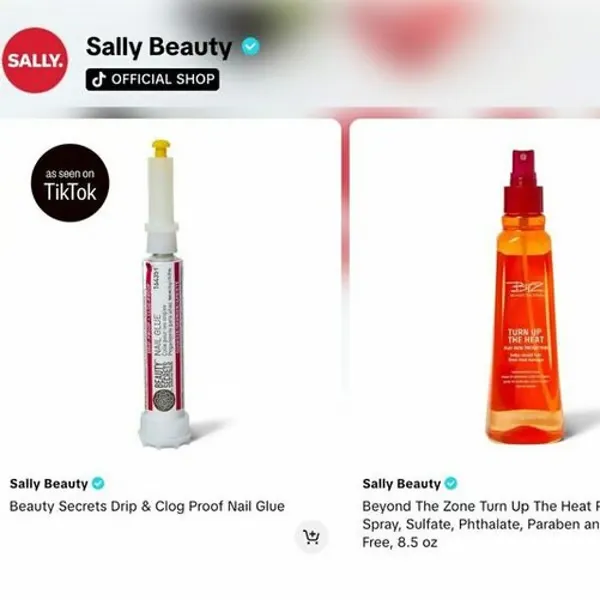
Sally Beauty launches on TikTok Shop
News distribution : Sally Beauty is expanding its social commerce strategy with the launch of its TikTok Shop.
US beauty retailer Sally Beauty has officially launched on TikTok Shop. As part of its social commerce strategy, the company is building a sales channel leveraging TikTok's live shopping and short-form video capabilities.
TikTok Shop's influence in the beauty industry is rapidly expanding, with major brands entering in succession. Social commerce is becoming established as a third sales channel alongside traditional e-commerce and brick-and-mortar stores.
Logistics & Fulfillment
Amazon Acquires Rivr — Stair-Climbing Delivery Robot Accelerates Last-Mile Automation

Amazon acquires Rivr, maker of a stair-climbing delivery robot
Amazon and Jeff Bezos had previously invested in the startup. The deal signals the company's push to automate last-mile delivery.
According to Yahoo Finance, Amazon has acquired Rivr, a startup developing stair-climbing delivery robots. Jeff Bezos had previously invested in the company personally.
Rivr's quadruped robots can automate deliveries up stairs and to doorsteps. Amazon has already invested in drone delivery and robotic warehouses, but "last-foot" automation remained a challenge. This acquisition brings the company one step closer to fully automated doorstep delivery.
Summary
The three days from March 20-22 marked a weekend where agentic commerce "infrastructure development" advanced rapidly. With Google UCP's cart and catalog support, Stripe's machine payments protocol, and PayPal's agent AI platform, the foundations for AI agents to actually "shop" in e-commerce are coming together across multiple layers.
At the same time, implementation challenges are becoming apparent, as demonstrated by OpenAI's shopping agent stumbles and Unit 42's security warnings. Forrester's finding that "consumers blame the AI engine" represents a risk that platform operators cannot afford to overlook.
Looking ahead, more announcements are expected as Shoptalk 2026 (scheduled for late March) approaches. Watch particularly for retailers declaring UCP support and OpenAI's new shopping features following its strategy pivot.
Related Articles

Google Announces Universal Commerce Protocol (UCP), Forms Major Coalition for Agentic Commerce Standardization
Google unveiled UCP at NRF 2026, an open standard co-developed with Shopify, Walmart, and 20+ partners to standardize AI agent-powered shopping experiences.

As AI Takes Over the Shopping Journey, Stripe and PayPal Race to Become AI Business Infrastructure
Stripe and PayPal race to transform from payment tools to AI business infrastructure, competing to become the default engine for AI-driven transactions.
Forrester Analysis: Closing the Trust Gap Is Key to Agentic Commerce's Next Phase
Forrester identifies three 'trust frontiers' in agentic commerce. Only 17-24% of consumers trust AI purchases, and EC operators must start building data quality and incremental trust now
Tags
Share this article