
When the Algorithm Decides — The Risk of 'Misrepresentation' That Agentic AI Poses to Luxury Brands

Akihiro Suzuki

Source: jingdaily.com
Key Takeaways
- Jing Daily highlights the "misrepresentation risk" luxury brands face from AI-driven automated purchasing
- AI agents may fail to correctly interpret a brand's cultural value, risking erosion of meaning
- E-commerce businesses urgently need to structure brand identity data for machine readability
The Era When AI Agents Decide Before Consumers Buy

When the algorithm decides: How agentic AI is challenging luxury brands
AI-powered systems are making purchasing decisions before consumers ever browse a catalog.
On March 21, 2026, luxury media outlet Jing Daily published an analysis of the fundamental challenges that agentic AI poses to luxury brands. The article was authored by Carlota Rodben and Daria Kunz, both former innovation leaders at Chanel.
The article's core message is clear: in an era where AI agents make purchasing decisions on behalf of consumers, the greatest risk luxury brands face is not "being undiscoverable" but "being misrepresented."
According to a McKinsey study from August 2025, 44% of consumers who tried AI search already use it as their primary information source. Furthermore, Adobe's analysis revealed that generative AI-driven traffic to retail sites surged 1,300% year-over-year during the 2024 holiday season. The era where AI decides purchases before consumers even open a catalog is no longer a prediction — it is reality.
Industry Trends
The luxury industry has long relied on brand experience and storytelling as its source of value. Artisan craftsmanship, heritage, cultural context — this "meaning" is what justifies premium pricing.
However, the foundation for agentic commerce is being rapidly built. In January 2026, Google CEO Sundar Pichai announced the Universal Commerce Protocol (UCP), co-developed with Shopify, Walmart, Target, Etsy, and Wayfair. This open standard covers the entire journey from product discovery to checkout and post-purchase support, designed for a future where AI agents — not browsers — serve as the primary commerce interface.
McKinsey predicts that by 2028, $750 billion in U.S. sales will flow through AI search. Traffic from traditional search channels could decline by 20–50%, and brand-owned websites account for only 5–10% of the sources referenced by AI search.
The Risk of Being "Misunderstood" Is Worse Than Being "Invisible"
In the Jing Daily article, Evelyn Mora, CEO of AI SaaS platform VLGE, identifies the fundamental problem: "Desire is not a spreadsheet problem. It is physical, spatial, and emotional."
Current AI systems — Amazon Rufus, Google Gemini, and others — rely on "proxy metrics" such as click counts and last-touch attribution. Under this framework, a hand-sewn coat and a premium mass-produced item become "adjacent products" the moment they are reduced to silhouette and material categories.
What follows is a three-stage collapse of value:
- Loss of heritage: A brand's history and cultural background get reduced to "origin data"
- Leveling of craft: Artisanship gets mechanically categorized as "material specifications"
- Brand demotion: Brands that should be destinations become just another item on a recommendation list
What makes this even more serious is that the "misinterpretation" repeats silently. Once an AI forms an incorrect interpretation, that interpretation is referenced repeatedly, gradually eroding the brand's meaning.
Impact on E-Commerce Businesses and How to Leverage
BoF's 2026 fashion industry report reports that AI shopping-related searches increased 4,700% between 2024 and 2025. To address this wave, here are the actions e-commerce businesses should take now.
Structuring brand identity is the top priority. Product data, archive materials, service language, and cultural positioning must be organized in formats that AI systems can interpret as "meaning." Major consumer goods companies like L'Oreal, Unilever, and Mars have already adopted product visibility systems for AI agents (AMP).
Leveraging schema.org markup and GS1 standards is also essential. Structured data that includes not just price, brand, material, and size, but also sustainability data and cultural context, helps agents understand products accurately.
Managing AI agent brand tone is another critical challenge. When deploying an AI agent on your e-commerce site, that agent represents your brand. A luxury brand using an AI that gives generic responses undermines its own positioning. Documenting tone, language, and priorities, and implementing mechanisms to control AI behavior, is essential.
Preparing for structural changes in loyalty is also necessary. As the Jing Daily article points out, if an AI agent understands a customer's preferences more deeply than competing brands, loyalty shifts from emotional to structural. Once loyalty becomes embedded in a system, it is extremely difficult to reclaim.
Summary
The rise of agentic commerce confronts the luxury industry not merely with a channel shift, but with a fundamental question: who defines a brand's meaning? Whether to delegate interpretation to AI systems or to structure and communicate meaning proactively — this choice will determine future brand value.
According to Salesforce's estimate, the agentic commerce market is projected to reach $3–5 trillion by 2030. For all e-commerce businesses that rely on brand storytelling as a competitive advantage — not just luxury — investing in "being correctly understood by AI" is a business imperative that can no longer be postponed.
Related Articles

Brunello Cucinelli Launches New E-commerce Site with Proprietary AI 'Callimacus' — A 'Pageless Site' Delivering New Luxury Experiences
Italian luxury brand Brunello Cucinelli unveils new e-commerce site powered by proprietary AI 'Callimacus'. An innovative approach that eliminates traditional page structures with AI providing real-time personalized responses.

Google Cloud's Invisible Shelf Strategy: How CPG Brands Can Be Chosen by AI Agents
Google Cloud introduces the Invisible Shelf strategy for the agentic commerce era. A paradigm shift from 'getting on the shelf' to 'being chosen by AI agents.'
IPG Study Exposes the 'Agentic Commerce War' — Why Legacy Brands Are Losing
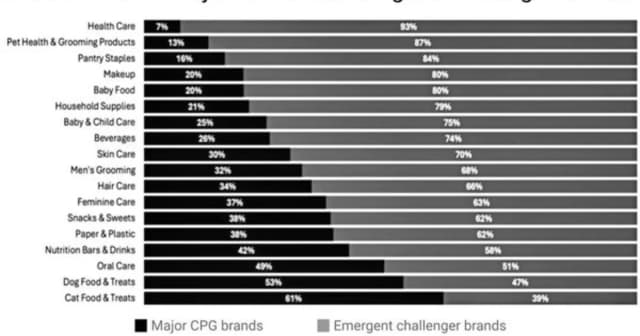
IPG study reveals challenger brands are winning against legacy brands in 16 out of 18 Amazon marketplace categories. Up to 90% of legacy brand product pages remain unupdated, with healthcare showing an 86-point win rate gap. 'Machine speed' content updates are now critical in the AI agent era.
Tags
Share this article