
DoorDash and Uber Begin Testing True Agentic Ordering in Google Gemini

Akihiro Suzuki
Twitter
Source: www.retailtouchpoints.com
Key Takeaways
- DoorDash and Uber begin beta testing AI agent-powered automatic ordering on the Google Gemini app
- A "true agentic experience" where AI autonomously executes multi-step operations reaches consumers for the first time
- AI agent compatibility in food delivery and grocery e-commerce becomes a new competitive differentiator for platform selection
The Impact of Google Gemini's "Leave It to AI" Ordering
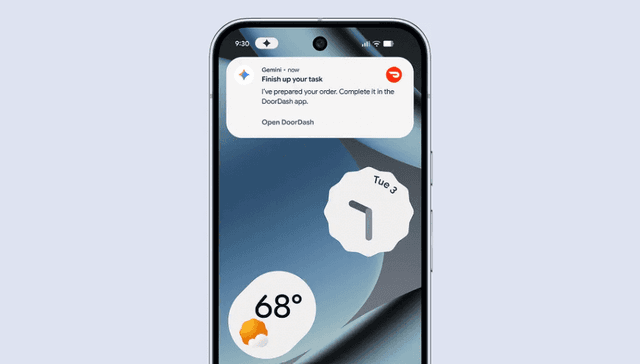
DoorDash, Uber Test Out True Agentic Ordering in Google Gemini - Retail TouchPoints
DoorDash is among the first to test a new agentic ordering experience in Google Gemini, alongside Uber and other similar companies.
On March 3, 2026, Retail TouchPoints reported that major food delivery and ride-hailing companies including DoorDash, Uber, and Grubhub are testing multi-step task automation on the Google Gemini app.
Users simply long-press the power button to launch Gemini and say things like "Reorder my last meal on DoorDash" or "Book a ride home," and the AI agent autonomously executes multiple operations within the app. Supported devices include Pixel 10, Pixel 10 Pro, and Samsung Galaxy S26 series, with initial availability in the US and South Korea.
While the term "agentic commerce" has been frequently used in the industry, a "true agentic experience" where AI executes multiple steps of the ordering process without user intervention is only now beginning to reach consumers.
Background and Industry Context
Competition to adopt AI agents in the food delivery and grocery e-commerce space is rapidly accelerating.
In December 2025, DoorDash launched grocery shopping within ChatGPT in collaboration with OpenAI. When users consult ChatGPT about recipes, the required ingredients are converted into a DoorDash shopping list and delivered from nearby stores in as little as one hour. National chains including Kroger and Safeway participate in the program.
DoorDash is also testing "Zesty," an AI-powered restaurant discovery app, in San Francisco and New York. It aggregates information from DoorDash, Google Maps, TikTok, and other sources to deliver personalized restaurant recommendations.
Meanwhile, Uber Eats launched an AI cart assistant in the US in February 2026. The feature automatically creates grocery shopping carts from text or photos, including handwritten shopping lists and recipe screenshots. Instacart had already introduced a similar cart assistant in November 2024, making AI-powered grocery automation an industry-wide trend.
Technical Architecture and Security Design of the Gemini Agent
What stands out about the Gemini automation feature is its technical architecture. According to 9to5Google, Gemini launches target apps within a "secure virtual window" on the device and executes operations there.
The specific mechanism works as follows:
- Gemini launches apps in a background virtual environment, automatically executing scrolling, tapping, and text input
- Screen processing within the virtual window is handled in the cloud
- Gemini cannot access the entire device and is restricted to the target app only
- Users can monitor Gemini's progress through real-time notifications and intervene or stop at any time
A particularly important security design decision is the rule that "the final order confirmation button must be tapped by the user." After Gemini automates menu selection, address entry, ride type configuration, and other steps, only the final purchase/order button is left to the user. This strikes a balance between reducing the risk of erroneous orders while eliminating tedious intermediate steps.
Chain Store Age reported that a DoorDash spokesperson commented, "The DoorDash integration with Gemini is part of our efforts to embed AI where it delivers the most value for consumers, merchants, and Dashers."
How This Differs from Other AI Commerce Integrations
What fundamentally distinguishes the Gemini integration from previous AI commerce integrations is its "automation of app operations themselves."
DoorDash's ChatGPT integration was "conversational commerce" that generated ingredient lists from recipes through conversation and handed them off to the DoorDash app. Users selected products during their conversation with ChatGPT and then needed to complete the order in the DoorDash app.
In contrast, Gemini's automation feature has AI perform the actual UI operations of the app. Users simply give Gemini a single instruction, and the entire sequence from app launch to menu selection, address entry, and cart creation is completed in the background. This represents a clear step up from "conversational" to "autonomous execution."
In South Korea, local apps such as Baemin and Kakao T are also planned for support, reflecting a design oriented toward global expansion. The feature will become available starting March 11 with the Galaxy S26 series launch, with rollout to the Pixel 10 series following later in March.
Impact and Action Items for E-Commerce Businesses
The Gemini automation feature offers the following implications for food delivery and grocery e-commerce businesses.
Adapting to order channels via AI agents is urgent. The fact that DoorDash, Uber, and Grubhub were among the first selected as Gemini automation partners signals that AI platform integration is becoming a new competitive axis for user acquisition. Google has announced plans to expand supported categories beyond food, grocery, and ride-hailing, making spillover into retail e-commerce as a whole just a matter of time.
Optimizing repeat orders is key. Gemini's initial use cases center on repeat tasks like "reorder my last meal" and "create my usual grocery cart." The richness of user order history data will determine re-order rates via AI agents. Structuring past order data and improving personalization accuracy will be critical.
Making app UI "agent-ready" is also required. Since Gemini visually recognizes and operates app UIs, consistent UI design, clear labeling, and stable navigation structures will improve AI agent operation accuracy. In the future, API integrations for AI agents and provision of in-app structured data will also become important.
Summary
Google Gemini's multi-step task automation symbolizes agentic commerce's transition from concept to implementation phase. With major food delivery players including DoorDash, Uber, and Grubhub among the first partners, the era of AI agents handling consumers' everyday purchasing activities is becoming reality.
Google plans to expand this automation capability throughout 2026, increasing the number of supported apps and task types. For e-commerce businesses, beginning technical and operational preparations now to accept orders from AI agents will be the key to gaining the next competitive advantage.
Related Articles
Google's Agentic Commerce Goes Live with Etsy and Wayfair — UCP Checkout Moves from Concept to Reality
Google's Universal Commerce Protocol (UCP) launches checkout with Etsy and Wayfair in the US. AI Mode enables direct purchasing within search results, marking the shift from concept to reality for agentic commerce.
AI Shopping Wars: Rivals Form Anti-Amazon Alliance as Agentic Commerce Battle Intensifies
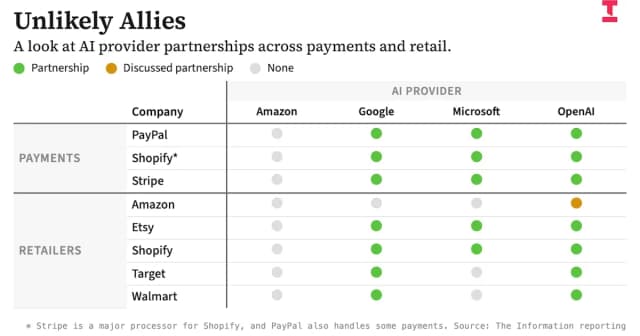
Over 10 companies including OpenAI, Shopify, Stripe, Microsoft, Walmart, and PayPal are forming partnerships to challenge Amazon. Explore the alliance map in the agentic commerce market projected by McKinsey to reach $1 trillion by 2030, and three key steps e-commerce businesses should take now.

What is Apps in ChatGPT? Complete Guide to Features and Use Cases
Learn about Apps in ChatGPT, the new feature that lets you use third-party apps directly within conversations. Discover how Instacart and DoorDash enable shopping from chat to checkout, and explore the future of conversational commerce.
Tags
Share this article