
DBS Bank Launches Asia Pacific's First Visa Intelligent Commerce Pilot — Agentic Commerce Moves Toward Real-World Implementation

Akihiro Suzuki
Twitter
Source: www.fintechfutures.com
Key Takeaways
- Singapore's DBS Bank demonstrates AI agent payments in Asia Pacific's first Visa Intelligent Commerce (VIC) pilot
- Following Mastercard's India proof-of-concept, Visa also completes live transactions as competition between the two major card brands intensifies
- E-commerce businesses should begin phased preparation for tokenization and AI agent authentication
DBS Bank and Visa Announce Joint Agentic Commerce Pilot

DBS and Visa to advance agentic commerce trials in Asia Pacific
Singapore's DBS Bank has become the first issuer in the Asia Pacific region to pilot Visa Intelligent Commerce for everyday payments.
On February 16, 2026, Singapore's DBS Bank, the largest bank in Southeast Asia, and Visa announced the progress of their joint agentic commerce pilot using Visa Intelligent Commerce (VIC) in an official press release. DBS Bank has become the first card issuer in the Asia Pacific region to participate in the VIC pilot.
The two companies have already completed live transactions at restaurants using DBS/POSB-issued credit and debit cards. This demonstrates the viability of "agent-led payments," where AI agents execute the entire process from product selection to payment on behalf of consumers. Plans call for expanding the scope of transactions to include online shopping and travel bookings.
Background and Industry Trends
Agentic commerce is a new form of commerce in which AI agents autonomously perform product search, comparison, purchase, and payment based on user instructions. It has rapidly gained attention in the payments industry since the second half of 2025, with the two major card brands -- Visa and Mastercard -- competing for leadership through their respective platforms.
Visa announced the Visa Intelligent Commerce initiative in October 2025 and formally announced its expansion to the Asia Pacific region at the Singapore FinTech Festival that November. The company is collaborating with over 100 partners worldwide, with more than 30 developing in the VIC sandbox. Visa predicts that millions will use AI agent payments by the 2026 holiday season.
Meanwhile, on February 17, 2026, Mastercard executed the world's first fully authenticated agentic commerce transaction at the India AI Impact Summit in New Delhi. Using cards from Axis Bank and RBL Bank, live transactions were completed through Mastercard Agent Pay at multiple merchants including Swiggy, Zepto, and Vodafone Idea. The timing -- just one day apart from the DBS-Visa announcement -- vividly illustrates the intensity of competition between the two camps.
Technical Architecture of Visa Intelligent Commerce
VIC is an integrated API suite that enables safe, transparent, and consent-based payments by AI agents on Visa's secure infrastructure. There are three core technical components.
First, "AI-ready credentials." Card information is tokenized and converted into authentication credentials that AI agents can use securely. Actual card numbers are never exposed externally. Ananya Sen, Regional Consumer Products head at DBS Bank, stated that the pilot "demonstrated that agent-led payments can be deployed safely and at scale."
Second, the "Trusted Agent Protocol (TAP)." An open framework developed by Visa, TAP enables merchants to cryptographically verify the legitimacy of AI agents. Using agent-specific cryptographic signatures, it distinguishes legitimate AI agents from malicious bots. T.R. Ramachandran, head of Visa Asia Pacific Products & Solutions, emphasized that "TAP is the foundation that makes agentic commerce safe, secure, and scalable."
Third, "intent-driven transaction controls." Permission settings managed by issuers control the types and amounts of transactions AI agents can execute. Transaction controls based on consumer intent are built in, preventing unintended purchases.
According to Visa's announcement, AI-driven traffic to retail sites has surged more than 4,700% over the past year. As distinguishing legitimate agents from fraudulent bots becomes an urgent priority, TAP implementation is an essential defense for merchants.
Impact on E-Commerce Businesses and Practical Applications
The implications of this pilot for e-commerce businesses are clear.
The Singapore market is ready. According to a Visa-commissioned survey, 77% of Singapore residents already use generative AI tools such as chatbots on a daily basis, and 8 out of 10 receive AI assistance when shopping online. Consumer AI receptiveness is extremely high, providing fertile ground for agentic commerce adoption.
Merchant adoption barriers are designed to be low. TAP is designed as a low-code, open solution that does not require significant overhaul of existing checkout infrastructure. Since it connects to Visa's 4.8 billion credentials and worldwide merchant network, building a new payment system is unnecessary.
Preparing for both Visa and Mastercard is important. Both Mastercard's Agent Pay and Visa's VIC are built on tokenization and cryptographic authentication. To support both networks, advancing tokenization infrastructure now is the practical priority.
However, the rollout is phased. DBS and Visa plan to start with dining, then expand to online shopping and travel bookings -- not an immediate rollout across all categories. Rollout schedules across Asia Pacific markets will be determined based on each country's regulatory requirements and ecosystem maturity.
Summary
DBS Bank's Asia Pacific-first Visa Intelligent Commerce pilot clearly demonstrates that agentic commerce has transitioned from the "concept" phase to the "live transaction" phase. The fact that Visa announced its APAC results the day after Mastercard demonstrated a fully authenticated transaction in India confirms that 2026 is the year agentic commerce goes mainstream.
Key areas to watch going forward include the timeline for expanding the DBS-Visa pilot to online shopping and travel, rollout plans to APAC markets beyond Singapore, and the trajectory of the standards competition between Visa TAP and Mastercard Agent Pay. For e-commerce businesses, building tokenization infrastructure capable of supporting agent payments on both networks -- rather than just one -- will be the key to future competitiveness.
Related Articles

Mastercard Completes World's First Fully Authenticated Agentic Commerce Transaction in India — Agent Pay Expands Across Asia Pacific
Mastercard completed a fully authenticated agentic commerce transaction at India AI Impact Summit 2026. An analysis of Agent Pay's tokenization and MCP authentication technology and its implications for e-commerce businesses.
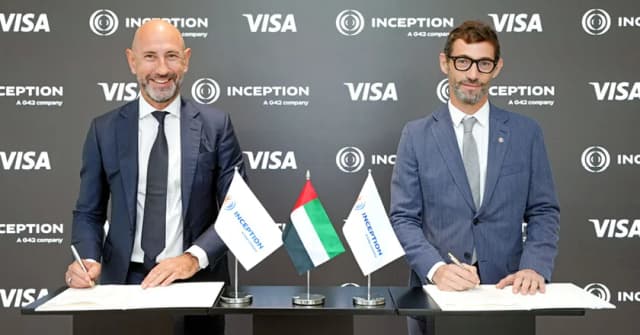
Visa and G42's Inception Announce Strategic Partnership to Accelerate Agentic Commerce in CEMEA Region
G42-backed AI company Inception partners with Visa to deploy agentic commerce infrastructure across CEMEA region. Integration of Visa Intelligent Commerce enables secure autonomous transactions by AI agents.

FIS Partners with Visa and Mastercard to Secure Banks' Position in Agentic Commerce
FIS announces partnership with Visa and Mastercard to launch bank-focused agentic commerce platform by end of Q1 2026. AI agents will automatically execute product searches, negotiations, and purchases through existing payment networks.
Tags
Share this article