
Mastercard Completes World's First Fully Authenticated Agentic Commerce Transaction in India — Agent Pay Expands Across Asia Pacific

Akihiro Suzuki
Twitter
Source: www.varindia.com
Key Takeaways
- Mastercard completed a fully authenticated agentic commerce transaction on an LLM at India AI Impact Summit 2026
- Demonstrated the "trust" and "interoperability" of AI agent-powered payments, leading industry standardization efforts
- E-commerce businesses should begin preparing for tokenization and agent authentication now
Mastercard Achieves a Historic Milestone in India

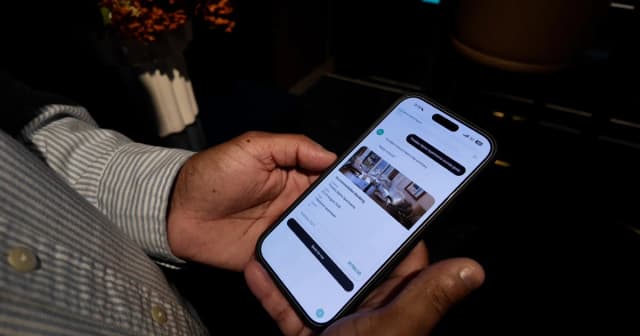
Mastercard completes fully authenticated agentic commerce transaction in India
The milestone transaction, executed on Mastercard's payment network in New Delhi, highlights India's growing role in AI-powered commerce.
On February 17, 2026, at the India AI Impact Summit 2026 in New Delhi, Mastercard completed the world's first "fully authenticated agentic commerce transaction" on its own payment network. Using the Agent Pay technology announced in April 2025, AI agents seamlessly executed the entire process of discovering, selecting, and paying for products on behalf of humans within an LLM (Large Language Model) interface.
The transaction used Mastercards issued by Axis Bank and RBL Bank. Four payment aggregators participated in processing: Cashfree Payments, Juspay, PayU, and Razorpay. On the merchant side, food delivery platform Swiggy/Instamart, telecom carrier Vodafone Idea (Vi), beauty retailer Tira, and quick commerce platform Zepto were among the participants.
Industry Landscape
Agentic commerce is a new form of commerce in which AI agents (autonomous AI) handle product search, comparison, purchase, and payment on behalf of users in an end-to-end manner. In traditional e-commerce, consumers had to navigate multiple apps, enter authentication credentials, and manually complete payments. Gautam Aggarwal, President of Mastercard India and South Asia, explained to ANI News: "There is no need to juggle 20 different apps. Simply give instructions through a conversational interface, and authenticated agents execute activities in the background."
In this space, Mastercard and Visa are engaged in intense competition. Visa announced its Visa Intelligent Commerce initiative in October 2025, introducing the "Trusted Agent Protocol" with more than 10 partners. Visa predicts that millions of consumers will use AI agent payments by the 2026 holiday season. Mastercard, meanwhile, has demonstrated its lead with a live Agent Pay transaction.
Technical Architecture of Agent Pay
Mastercard agentic commerce transaction at India AI Impact Summit
The transaction was tokenized and authenticated using MCP (Model Context Protocol), an open-source standard for connecting AI applications with external systems.
The reason this Indian transaction is drawing attention is that it was not a mere demo but "fully authenticated." The transaction was tokenized and authenticated using MCP (Model Context Protocol), an open-source standard for connecting AI applications with external systems.
The core technology behind Agent Pay is a mechanism called "Mastercard Agentic Tokens." According to FinTech Magazine, AI agents first undergo registration and verification to become certified as "trusted agents." Once certified, agents initiate transactions using dynamically generated, cryptographically secure credentials (Agentic Tokens). Actual card numbers are never exposed.
Furthermore, the Mastercard Agent Pay Acceptance Framework is provided for merchants. According to Mastercard's official website, the company has partnered with Cloudflare to introduce "Web Bot Auth" based on the IETF RFC 9421 standard. This enables merchants to cryptographically distinguish trusted AI agents from malicious bots without any code changes.
Aggarwal emphasized that "security is built into Mastercard's systems and processes by default." As digital payment expansion brings increased fraud attempts, the company's foundational technology serves as a critical fraud detection layer for both agent and non-agent transactions.
Impact and Implications for E-Commerce Businesses
A particularly noteworthy aspect of this transaction is the demonstrated "interoperability." All layers of the payment ecosystem -- issuers, acquirers, payment aggregators, and merchants -- worked together to achieve consistent, secure transactions regardless of which AI platform or partner was involved.
The practical implications for e-commerce businesses are as follows:
Accelerating tokenization adoption is essential. Agent Pay builds on existing tokenization infrastructure (mobile contactless payments, card-on-file, etc.). Businesses already supporting Mastercard Payment Passkeys or tokenization will face lower barriers to transitioning to agentic payments.
No-code agent acceptance is possible. With the Agent Pay Acceptance Framework, agents send a "Dynamic Token Verification Code" to standard card payment fields. No large-scale system modifications are required on the merchant side -- existing checkout forms can be leveraged.
New consumer touchpoints are emerging. AI agents analyze consumer preferences and contextual information to recommend optimal products and complete payment. For businesses, this enables consistent customer identification across sessions, making it easier to deliver personalized recommendations and rewards.
Meanwhile, Mastercard plans a phased rollout across the Asia-Pacific region. The company will pursue collaboration with LLM developers and AI technology providers, integration of security standards with banks, fintechs, and merchants, and consumer trust-building initiatives in parallel.
Conclusion
Mastercard's fully authenticated agentic commerce transaction demonstrated in India marks an industry milestone by proving the concept that "AI agents can make payments safely" on an actual payment network. In approximately 10 months since the Agent Pay announcement in April 2025, the company has achieved live transactions within an LLM and demonstrated ecosystem-wide interoperability involving multiple banks, payment processors, and merchants.
Key areas to watch going forward include the rollout timeline to other Asia-Pacific markets following India, the trajectory of the standards competition with Visa's Intelligent Commerce, and how regulatory authorities in each country will position AI agent payments. E-commerce businesses are urged to begin preparing for tokenization and agent authentication frameworks now.
Related Articles

Mastercard Launches "Agent Suite" for Agentic Commerce — AI Agent Building Service for Banks and Merchants
Mastercard announces Agent Suite for AI agent building and deployment. Analysis of the difference from Agent Pay and integrations with Google, Microsoft, and OpenAI
Mastercard Completes Australia's First AI Agent Payment — Agent Pay Enters Live Transaction Phase
Mastercard completes Australia's first authenticated AI agent payment using CBA and Westpac cards. How Agent Pay works and what it means for e-commerce businesses

What is Agentic Payment? AI-Powered Next-Gen Automated Payments
[2-Minute Read] Learn about Agentic Payment, where AI agents autonomously handle payments. Discover the mechanisms, key players like Visa, Mastercard, and Stripe, and implementation strategies for automated payment systems.
Tags
Share this article