
Stripe Explores Acquisition of PayPal at ~$40B Valuation -- A Potential Mega-Merger That Could Reshape the Payments Industry

Akihiro Suzuki
Twitter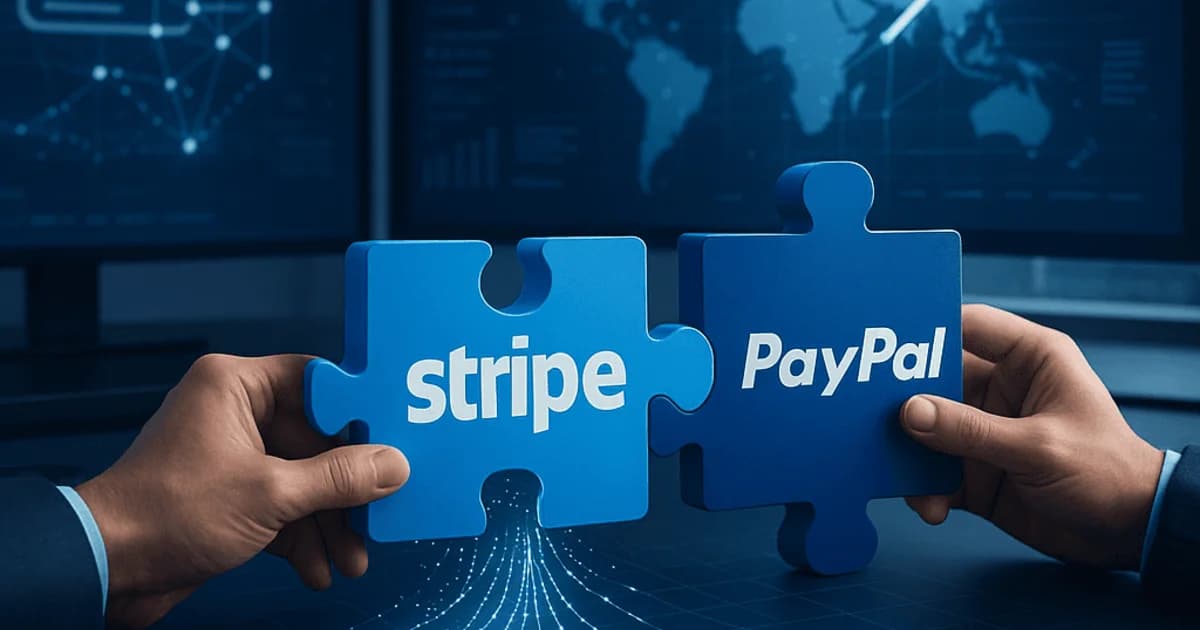
Source: www.techbuzz.ai
Key Takeaways
- Bloomberg reports that Stripe, valued at $159 billion, is exploring a full or partial acquisition of PayPal -- a deal that would be the largest M&A in fintech history if completed
- Combining Stripe's developer-first payment infrastructure with PayPal's 400-million-strong consumer base could fundamentally redraw the payments industry landscape
- E-commerce businesses should urgently reassess their multi-payment strategies in anticipation of potential provider consolidation
PayPal Shares Surge ~7% After Hours on Stripe Acquisition Report
Stripe Eyes PayPal Acquisition as Fintech Giant Seeks Revival
PayPal surges 7% on reports Stripe is weighing acquisition of struggling payments pioneer
On February 24, 2026 (U.S. time), Bloomberg reported that fintech payments giant Stripe is exploring the acquisition of publicly traded PayPal, either in full or in part. PayPal shares rose approximately 7% in after-hours trading following the report. Discussions are still at an early stage, and it remains unclear whether a deal will materialize. Both Stripe and PayPal declined to comment.
The deal could exceed $60 billion, which would make it the largest M&A transaction in fintech history. On the same day, Stripe announced that its valuation had reached $159 billion through a tender offer for employees and shareholders -- a 74% increase from $91.5 billion the previous year.
Background and Industry Context
Behind this acquisition report lies PayPal's rapid decline in performance. PayPal's market capitalization currently hovers around $40 billion, with its stock price dropping by roughly one-third in 2025 alone. The decline has continued into 2026, with shares falling more than 19%.
Most recently, PayPal's board dismissed CEO Alex Chriss in early February and appointed HP CEO Enrique Lores as his successor -- an unusual leadership shakeup triggered by fiscal 2026 profit guidance that fell short of Wall Street expectations. Lores is set to officially take the helm on March 1, with CFO and COO Jamie Miller serving as interim CEO until then.
Stripe, on the other hand, is thriving. Its total payment volume in 2025 reached $1.9 trillion, a 34% year-over-year increase. According to TechCrunch, major venture capital firms including Andreessen Horowitz and Thrive Capital participated in the latest tender offer. In January 2026, Stripe also acquired Metronome for approximately $1 billion, a usage-based billing platform serving clients like OpenAI and Anthropic, signaling an aggressive M&A strategy.
Why Stripe Wants PayPal -- The "Developer x Consumer" Integration Play
Stripe co-founder and President John Collison told CNBC that an IPO is not a priority. Nevertheless, a PayPal acquisition could force a fundamental strategic pivot for Stripe.
Stripe has grown as a "developer-first" payment infrastructure company. Its easy-to-use APIs and transparent pricing have attracted platforms like Amazon and Shopify, and the company has expanded its capabilities through in-house development -- from fraud detection to corporate cards and treasury management.
PayPal, by contrast, is a "consumer-facing payment brand" with over 400 million consumer accounts and transaction relationships with millions of small and medium businesses worldwide. It covers a broad range of consumer touchpoints, including Venmo (popular among younger demographics), PayPal Credit (buy-now-pay-later), and cryptocurrency support.
If the two companies were to merge, a single entity would control both "backend payment infrastructure (Stripe)" and "frontend consumer base (PayPal)." This resembles Block (formerly Square) operating both Cash App and merchant services, but on a vastly larger scale.
However, the deal structure presents significant challenges. How Stripe, a private company, would finance the acquisition of PayPal -- at a market cap of roughly $40 billion plus a premium -- remains uncertain. It could require public market fundraising or taking on substantial debt, potentially forcing the long-avoided IPO. Moreover, the merger of two major payment processors would face rigorous antitrust scrutiny across multiple jurisdictions, including the United States.
Impact and Implications for E-Commerce Businesses
This report signals that a "consolidation phase" in the payments industry is accelerating in earnest. E-commerce businesses need to prepare from three perspectives.
Reassess concentration risk in payment providers. If Stripe and PayPal were to merge, a dominant share of online payments would be concentrated in a single company. Businesses currently using both Stripe and PayPal would be wise to begin evaluating alternative payment options such as Adyen and Square, in anticipation of potential changes to pricing structures and service specifications post-merger.
A wait-and-see approach is appropriate in the short term. Discussions are at an early stage, and any deal would take considerable time to complete, including antitrust review. There is no need to rush into switching payment providers at this point. However, pay attention to long-term lock-in terms when renewing contracts.
Monitor the evolution of consumer payment experiences. The greatest potential value of a Stripe-PayPal combination lies in merging developer-friendly API flexibility with a 400-million-strong consumer base to create "a new checkout experience." Combined with the evolution of AI payment agents and agentic commerce, an era where payment UX innovation directly impacts e-commerce competitiveness is approaching.
Conclusion
Stripe's reported interest in acquiring PayPal is still at a preliminary stage. However, the mere emergence of a scenario where the largest fintech company, valued at $159 billion, could bring the pioneer of online payments under its umbrella is emblematic of an industry inflection point.
Key developments to watch going forward include the management direction of PayPal's incoming CEO Lores (starting March 1), shifts in Stripe's IPO strategy, and regulatory responses across jurisdictions. The surge in PayPal's stock price suggests the market sees more value in the company becoming part of another company's vision than in its standalone growth strategy. For e-commerce businesses, this is an opportune moment to begin reassessing multi-payment strategies in preparation for a potential major realignment of the payments infrastructure landscape.
Related Articles

As AI Takes Over the Shopping Journey, Stripe and PayPal Race to Become AI Business Infrastructure
Stripe and PayPal race to transform from payment tools to AI business infrastructure, competing to become the default engine for AI-driven transactions.

PayPal Acquires Israel's Cymbio—Targeting Agentic Commerce Leadership with "Store Sync"
PayPal acquires multi-channel platform Cymbio in a deal reportedly worth hundreds of millions, making a major push into AI commerce. How Store Sync works and the payment giants' battle for agentic commerce

Why Payment Infrastructure Company Checkout.com Is Strategically Focusing on Agentic Commerce
Why payment infrastructure company Checkout.com is strategically focusing on agentic commerce - 47% of consumers ready to embrace AI shopping agents in 2026.
Tags
Share this article