
Shopify Implements Major Restructuring in Partnerships Division, Declares 'New Chapter' Ahead

Akihiro Suzuki
Twitter
Source: thelogic.co
Key Takeaways
- Shopify implements "significant" layoffs in its partnerships division
- Part of organizational efficiency efforts based on AI-first strategy, continuing personnel optimization since 2022
- E-commerce businesses should understand changes in partner support and consider strengthening self-reliance
Shopify Implements Layoffs in Partnerships Division
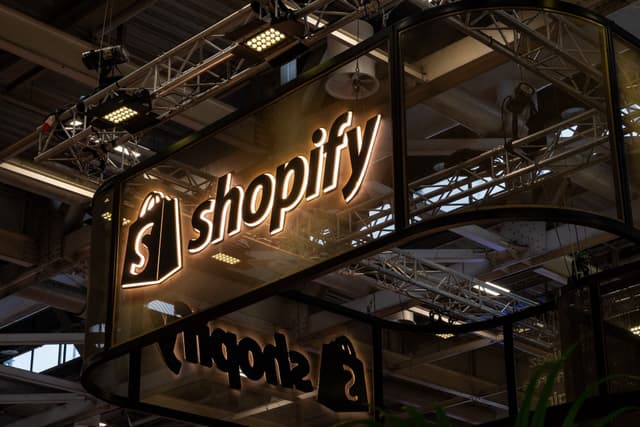
Shopify cuts 'significant' number of staff as part of major restructuring
The e-commerce firm said the restructuring is part of its plans for 'a new chapter' in how it works with its partners.
In January 2026, Canadian e-commerce platform giant Shopify implemented a "significant number" of layoffs in its partnerships division. The company has positioned this restructuring as "a new chapter in how it works with its partners."
According to The Logic's reporting, this restructuring is part of Shopify's ongoing organizational efficiency efforts. The company also conducted layoffs of approximately 80 people in November 2025, with spokesperson Ben McConaghy telling BetaKit that they "removed layers that created complexity that didn't create merchant value."
Background and Industry Trends
This isn't Shopify's first round of layoffs. According to an analysis article in The Walrus, the company reduced approximately 10% (about 1,000 people) in July 2022, acknowledging it had misjudged post-pandemic e-commerce growth. In May 2023, it cut an additional 20% of staff and sold its logistics division to Flexport.
CEO Tobias Lütke explained in a May 2023 official announcement that the company would withdraw from businesses that had become "side quests" to focus on its "main quest." Citing an "unhealthy" ratio of managers to individual contributors, management positions have been systematically reduced.
Meanwhile, business performance has been strong. According to Modern Retail, 2025 was the company's strongest year since 2021, with Q3 GMV (Gross Merchandise Volume) reaching approximately $92 billion, up 32% year-over-year. The company has achieved operating profitability for nine consecutive quarters.
Organizational Transformation Driven by AI-First Strategy
Key to understanding this restructuring is the memo CEO Lütke sent to all employees in April 2025. As reported by CNBC, this memo explicitly states that "teams need to demonstrate why AI cannot do the job before requesting additional headcount."
AI adoption has also become part of employee evaluations, with Lütke declaring that "AI will completely change Shopify, our work, and the rest of our lives." In practice, the company provides employees with access to tools such as Microsoft Copilot, Anthropic Claude, and Cursor.
Under this policy, employee count has decreased from 11,600 in 2022 to 8,100 by the end of 2024. The company is transitioning to a "lean and efficient" model where revenue grows over 21% annually while headcount shrinks.
Partner Ecosystem Overhaul
The partnerships division restructuring is linked to a major overhaul of the partner program itself. According to Shopify's official partner blog, a new tier model was introduced in October 2025.
The new program establishes two tracks—"Services" and "Technology"—designed to allow agencies, consultants, ISVs (Independent Software Vendors), and app developers to operate on their optimal path. The Services track includes five tiers from "Registered" to "Platinum."
Notably, Shopify has positioned "attachment" as a key metric. The company encourages partners to be involved in as many deals as possible, strengthening co-selling mechanisms.
Impact and Countermeasures for E-commerce Businesses
This restructuring has multiple implications for e-commerce businesses.
First, partner-based support structures may change. As Shopify restructures its partnerships division, there may be temporary variations in how partner companies collaborate and in support quality.
Second, acceleration of AI adoption. Shopify announced over 150 AI features in its "Winter '26 Edition" at the end of 2025. The company is making a full transition to agentic commerce, including enabling direct purchases within ChatGPT. E-commerce businesses also need to enhance their AI tool utilization skills.
Furthermore, attention to the enterprise shift is necessary. Shopify is strengthening its acquisition of enterprise customers such as Estée Lauder and Barnes & Noble. As support for small and medium businesses trends toward AI automation, improving self-reliant problem-solving capabilities is required.
Conclusion
Shopify's partnerships division restructuring is an extension of the organizational efficiency efforts the company is pursuing under its AI-first strategy. While business performance remains strong, the pursuit of "lean efficiency" is expected to continue.
For e-commerce businesses, it's important to prepare for changes in Shopify's support structure while enhancing their own AI utilization and technical response capabilities. Understanding the new tier model of the partner program and considering collaboration with appropriate partner companies as needed are also effective countermeasures.
How the "new chapter" Shopify has proclaimed will change the entire ecosystem requires continued monitoring of future developments.
Related Articles
Shopify Partners with Both Google and Microsoft for Agentic Commerce, Pursues All-Encompassing Strategy
Shopify co-develops Google's UCP while also integrating with Microsoft Copilot Checkout. Building a 'buy from any AI' environment as an e-commerce platform.
Shopify President on 'Merit-Based Shopping' - How AI Agents Are Democratizing Retail
Shopify President Harley Finkelstein explains merit-based shopping at NRF 2026, where AI agents discover products based on quality rather than ad spend.

What is Agentic Commerce? Explaining the New Era of AI-Powered Purchasing
Explore the full scope of Agentic Commerce. AI agents autonomously execute everything from product selection to payment on behalf of users. Discover shocking data including 4,700% increase in AI-driven traffic and 20% of Walmart's traffic from ChatGPT, along with three essential preparation steps companies should start immediately.
Tags
Share this article