
Meta Acquires AI Agent Social Network Moltbook — Laying the Foundation for Agentic Web Commerce

Akihiro Suzuki
Twitter
Source: www.techbuzz.ai
Key Takeaways
- Meta acquires AI agent social network Moltbook, with both co-founders joining Meta Superintelligence Labs
- The acquisition targets building advertising and commerce infrastructure for the "agentic web" era, where AI agents handle shopping and transactions on behalf of humans
- E-commerce businesses should now consider API readiness for agent interactions and optimizing product information for AI agents
Meta Acquires Moltbook, Strengthening Its AI Agent Infrastructure
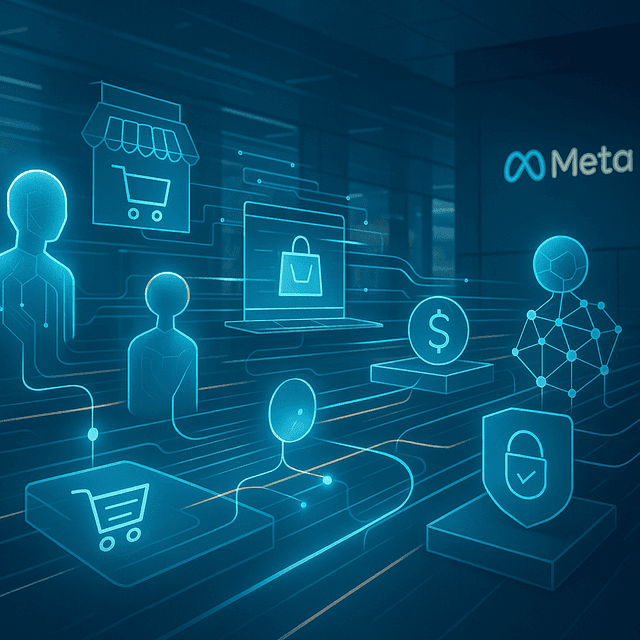
Meta's Moltbook Buy Signals Agentic Web Commerce Shift
Meta acquires Moltbook to position for AI agent-driven commerce revolution
On March 10, 2026, Meta officially announced its acquisition of Moltbook, the viral "social network for AI agents." As part of the deal, Moltbook CEO Matt Schlicht and COO Ben Parr will join Meta Superintelligence Labs (MSL), led by former Scale AI CEO Alexandr Wang. While the acquisition price was not disclosed, both executives are scheduled to begin work at MSL on March 16.
A Meta spokesperson told CNBC that "the Moltbook team joining MSL opens new ways for AI agents to work for people and businesses," adding that "connecting agents through an always-on directory is a new step in a rapidly evolving field."
Background and Industry Trends
Moltbook launched in late January 2026 as a niche experimental project. It quickly went viral as a "Reddit-style social network" where AI agents could share code and discuss their human owners. Originally a spin-off from the OpenClaw project (formerly Clawdbot / Moltbot), it attracted attention for its ability to autonomously perform tasks such as calendar management, email sending, and online shopping.
However, the platform was also controversial, with reports that many posts were actually written by humans and concerns about security breaches.
Behind this acquisition lies the accelerating shift toward the agentic web across the entire tech industry. Major players including OpenAI, Google, Microsoft, and Amazon are racing to commercialize AI agents. Meta CEO Mark Zuckerberg stated in 2025 that "just as every business has an email address and a website, they'll have a business AI", and this acquisition represents the concrete realization of that strategy.
The Future of Commerce Through the "Agent Graph"
As TechCrunch's analysis points out, the essence of this acquisition goes beyond a simple talent acquisition (acqui-hire). What Meta is aiming for is the construction of an "agent graph" — the successor to the "friend graph" (social connections between people).
An agent graph is a system that maps how AI agents are connected and what actions they can take with each other. Just as Facebook built its advertising business on the social graph, the relational data between agents could become the foundation for the next generation of advertising and commerce.
Specifically, advertising in the agentic web world will fundamentally change. Rather than showing product images to humans to stimulate purchase intent, the model may shift to one where "consumer AI agents" and "business AI agents" negotiate directly to complete transactions. Meta's vast social data, behavioral data, and preference data will serve as the foundation for agents to make optimal purchasing decisions on behalf of users.
Impact on Meta's Advertising Business
Meta's advertising business generates approximately $135 billion annually. Currently built on a model of reaching humans through social feeds, this structure will fundamentally change in a world where AI agents handle shopping.
According to industry analysis, future monetization is expected to proceed along two axes. First, "referral and transaction fees" from products naturally recommended by AI agents. Second, "paid placements" where merchants pay for priority positioning in AI agent responses. This aligns with OpenAI's move to charge a 4% fee on purchases made through ChatGPT.
Meta has increased its 2026 capital expenditure to $115 billion to $135 billion, rapidly expanding investment in AI infrastructure. The Moltbook acquisition, while relatively small in scale, holds a strategically critical position as part of this broader initiative.
Impact and Action Items for E-Commerce Businesses
For e-commerce businesses, this development presents a new challenge: "AI agent readiness." Here are the key areas to consider going forward.
Short-term action (now): Structuring product data and building APIs is essential. Businesses need to make product catalog metadata and pricing information machine-readable so that AI agents can accurately read, compare, and evaluate product information.
Mid-term action (6-12 months): Beyond leveraging AI advertising tools like Meta Advantage+ for automation, building systems to measure and analyze traffic from AI agents will become necessary.
Long-term perspective: Businesses should consider deploying "business AI agents." Developing agents that can effectively present products and services to consumer AI agents may become a source of competitive advantage.
However, there are caveats. It will take time for retailers to adopt agent-ready APIs, and challenges around trust and security in delegating financial transaction decisions to AI agents still need to be resolved.
Summary
Meta's acquisition of Moltbook may appear to be a small acqui-hire at first glance, but its strategic significance is substantial. As the era of the agentic web approaches — where AI agents discover, compare, and purchase products on behalf of consumers — Meta is positioning itself to control the agent graph as the successor to the social graph.
With Amazon and Google already advancing experiments in AI agent-driven commerce, designing customer experiences not just for humans but also for AI agents is becoming a theme that will determine future growth for e-commerce businesses. The next thing to watch is what specific agentic commerce features Meta will roll out on Facebook and Instagram. It will be worth monitoring the launch timeline for the "new agentic models and personalized AI features" that Zuckerberg has referenced.
Related Articles

Zuckerberg Previews Agentic Commerce: Meta's Q4 Earnings Reveal Full 2026 AI Strategy
Meta's Q4 2025 revenue hits $59.9 billion beating estimates, as Zuckerberg declares 2026 'a big year for delivering personal super intelligence' and previews agentic shopping tools. 3.58 billion users' personal context forms the core of Meta's AI strategy.

What is Agentic Commerce? Explaining the New Era of AI-Powered Purchasing
Explore the full scope of Agentic Commerce. AI agents autonomously execute everything from product selection to payment on behalf of users. Discover shocking data including 4,700% increase in AI-driven traffic and 20% of Walmart's traffic from ChatGPT, along with three essential preparation steps companies should start immediately.
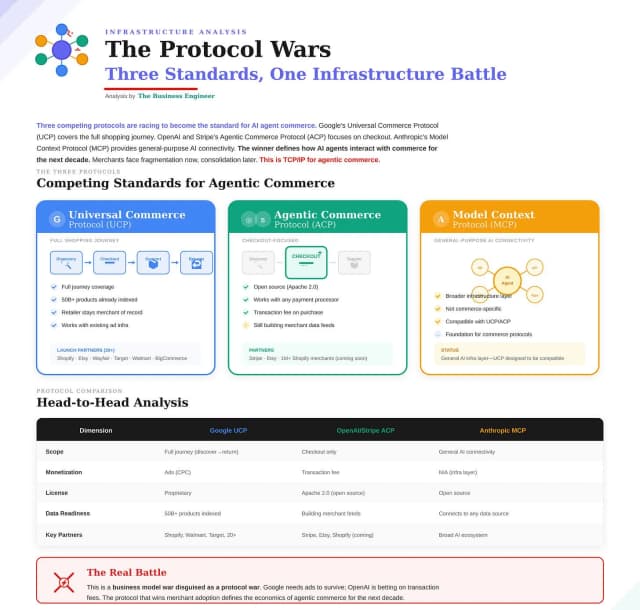
Microsoft Copilot Checkout Arrives: AI Commerce Market Now Has Four Major Players
Google, OpenAI, Microsoft, and Perplexity compete for AI commerce dominance with different protocols and revenue models. Here's what e-commerce businesses need to know about each player's strategy.
Tags
Share this article