
FedEx Goes All-In on Premium E-Commerce Delivery: 'If You're Shipping T-Shirts, We're Not Your Carrier'

Akihiro Suzuki
Twitter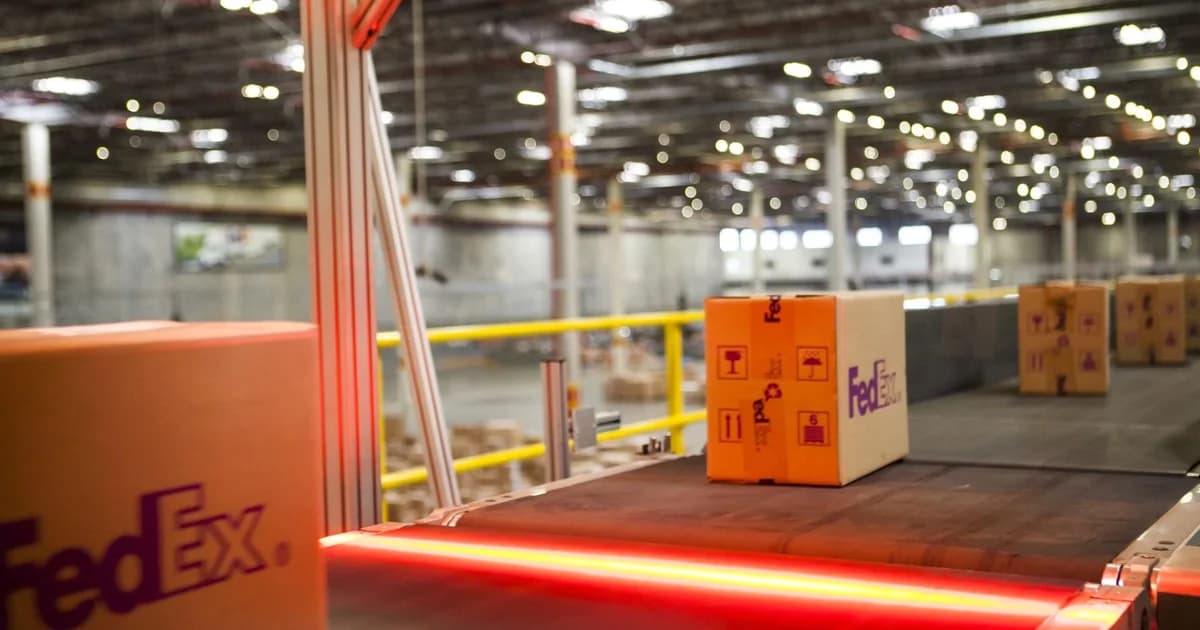
Source: www.freightwaves.com
Key Takeaways
- FedEx outlines an e-commerce delivery strategy focused on high-value, heavy, and long-haul parcels at its 2026 Investor Day
- Enhanced delivery surcharges and over 475 facility closures accelerate structural transformation of e-commerce logistics
- E-commerce businesses handling lightweight, low-value products should urgently explore alternative carriers
FedEx Declares a "Selective E-Commerce Delivery" Strategy
FedEx doubles down on premium e-commerce, delivery surcharges
When it comes to e-commerce delivery, FedEx only wants longer-haul, heavy and high-value parcels because operating as a local courier for small packages isn't profitable.
On February 13, 2026, at its 2026 Investor Day held at its Memphis, Tennessee headquarters, FedEx articulated a clear strategic pivot for its e-commerce delivery business. Chief Customer Officer (CCO) Brie Carere stated, "If you're shipping a T-shirt, FedEx isn't for you. If you're shipping an Oura Ring, FedEx is your carrier," declaring an explicit withdrawal from low-value, lightweight shipments.
FedEx is targeting the high-margin segment of the $95 billion global B2C parcel market. The company currently holds approximately 30% of this market and aims for low single-digit growth through 2029. Specifically, it is positioning three areas as competitive strengths: long-haul transport (over 300 miles accounts for 70% of ground service revenue), heavy parcels, and cross-border e-commerce.
Background and Industry Trends
FedEx's strategic pivot reflects structural changes across the e-commerce logistics industry. As Amazon expands its own delivery network and alternative carriers such as OnTrac drive low-cost competition in last-mile delivery, delivering lightweight parcels had become a margin-eroding factor for traditional major carriers.
In this context, FedEx is accelerating its "Network 2.0" initiative, also announced in February. According to Supply Chain Dive, the company will close more than 475 facilities by the end of 2027, consolidating its previously separate Ground and Express networks into one. Over 200 locations have already been closed, and by peak season 2026, 65% of targeted parcels are expected to pass through Network 2.0-optimized facilities. The consolidation is projected to yield $2 billion in cost savings.
In other words, FedEx is pursuing a "quality over volume" transformation in tandem with network restructuring. The company can maintain service quality while reducing locations because of its strategy to relinquish local last-mile delivery and concentrate on long-haul trunk transport.
Surcharge Escalation and Full Cost Pass-Through
A notable aspect of this strategy is the explicit positioning of delivery surcharges as a revenue pillar. Carere stated, "To be profitable in e-commerce, you need to accurately reflect incremental costs," completely reversing the previous approach of accepting low-cost e-commerce shipments to increase parcel density.
According to an AFS Logistics and TD Cowen investment bank study, ground parcel rates in Q4 2025 rose 34% compared to 2018, reaching an all-time high. Average surcharges imposed by carriers increased 13% quarter-over-quarter. FedEx and UPS introducing "blanket demand surcharges" despite moderate demand growth was a major driver.
For specific 2026 rate changes, FedEx implemented a 5.9% base rate increase on January 5. The residential delivery surcharge was raised 8.4% from $6.55 to $6.95 per package, significantly exceeding the base rate increase. The company has also stated its intention to deploy not only peak season surcharges but also year-round capacity adjustment fees across the US, Europe, and Asia.
Reverse Logistics as a Growth Area
At the same time, FedEx is also presenting a new value proposition for e-commerce businesses: reverse logistics (returns management). The company estimates total addressable market demand at $500 million.
In collaboration with parcelLab, FedEx has launched new AI-powered post-purchase digital tools. These include automated AI responses to common delivery and returns inquiries, and pattern analysis from tracking and returns data to identify issues. Additionally, box-free, label-free returns services combined with store drop-off locations simplify the consumer experience.
Carere noted, "Returns show up in our network as profitable B2B shipments," emphasizing the advantage of consolidated delivery to retailers' distribution centers for maintaining route density.
Impact on E-Commerce Businesses and Practical Applications
FedEx's strategic pivot sends a clear message to e-commerce businesses.
Businesses that will be impacted include e-commerce operators whose primary products are lightweight, low-value items (apparel, general merchandise, etc.). As FedEx intentionally exits this segment, further rate increases and service reductions can be expected. Exploring alternative carriers such as OnTrac and DHL eCommerce is necessary.
Businesses that stand to benefit are those dealing in high-value products (jewelry, electronics, healthcare products, etc.) and heavy items. FedEx's focus on quality and service should lead to improved delivery experiences. Even for small and mid-sized e-commerce businesses without multiple distribution centers, FedEx's long-haul network remains a strong option.
For cost management, AFS Logistics' Mingshu Bates notes, "Rates are at record highs, but there is room for price negotiation if you know where to look and which buttons to press." Discount rates have been trending upward since the end of 2025, and carriers are showing willingness to make concessions for businesses that can provide strategically significant shipment volumes.
Summary
FedEx's "all-in on premium e-commerce delivery" symbolizes the polarization of the e-commerce logistics industry. Major carriers are concentrating on high-margin segments, while lightweight, low-value delivery is increasingly left to alternative carriers and Amazon's delivery network.
Key areas to watch going forward include the progress of Network 2.0 consolidation and the global expansion of the surcharge strategy. In Europe in particular, FedEx is also building a parcel locker network through the acquisition of InPost, and the extent to which it can balance its premium strategy with convenience is the next focal point. For e-commerce businesses, this is a pivotal moment to redesign delivery strategies aligned with their product characteristics.
Related Articles

TikTok Shop Enters European Market with 'Fulfilled by TikTok' Logistics Strategy
TikTok Shop now operates in 6 European countries, with plans to expand to Poland, Netherlands, and more in 2026. New 'Fulfilled by TikTok (FBT)' logistics service launches in Germany and Spain.

JD's Full Acquisition of Deppon Logistics: $544M at 35% Premium Marks China Logistics Consolidation
JD Logistics launches tender offer for remaining Deppon Logistics shares at 35% premium. Total acquisition value: 3.797 billion yuan (~$544M). From 66% stake in 2022 to full ownership, accelerating logistics network integration.

US Retail Market to Reach $6.2 Trillion by 2030: Forrester Forecast Reveals In-Store Dominance and Winning Strategies for E-Commerce
Forrester forecasts US retail sales to grow from $5.2 trillion in 2025 to $6.2 trillion by 2030. In-store sales will still account for 71%, making omnichannel strategy and agentic commerce readiness the keys to e-commerce growth.
Tags
Share this article