
EC & AI Commerce News Digest (March 16, 2026)

Akihiro Suzuki
Twitter
Source: www.ad-hoc-news.de
Key Takeaways
- AWS unveils x402 protocol technical vision for autonomous AI agent payments
- Flipkart shifts holding company from Singapore to India, accelerating IPO preparations
- Geopolitical risks and tariff enforcement accelerate structural changes in e-commerce logistics and cross-border trade
Today's Top Story
AWS Unveils Technical Vision for Autonomous AI Agent Payments via x402 Protocol
x402 and Agentic Commerce: Redefining Autonomous Payments in Financial Services | Amazon Web Services
How the x402 Protocol Lets AI Agents Transact Autonomously, and What That Means for the Financial Services Industry
AWS has published a technical vision on its official blog for agentic commerce leveraging the x402 payment protocol, which extends the HTTP 402 (Payment Required) status code.
x402 is a protocol that enables AI agents to autonomously execute payments without human intervention. By extending the traditional HTTP "402 Payment Required" response code, it proposes a mechanism for micropayments and service-to-service payments between AI agents. While AI agents are already being used in financial services for market data analysis, credit risk assessment, and compliance monitoring, autonomous payment execution has emerged as the next critical challenge.
AWS publishing this vision in conjunction with its own services such as Amazon Bedrock is a significant signal that agentic commerce payment infrastructure is entering a serious implementation phase.
Full article: AWS Unveils x402 Protocol-Based Autonomous AI Agent Payment Infrastructure for Financial Services
Agentic Commerce
Temu Faces Mounting Headwinds from Tariff Enforcement and E-Commerce Slowdown

Temu App Faces Mounting Headwinds Amid Global E-Commerce Slowdown
The Temu App, PDD Holdings' aggressive discount shopping platform, encounters user growth challenges
PDD Holdings' discount e-commerce app Temu is facing multiple headwinds. In the US, the push to eliminate the de minimis rule is accelerating, and if the tariff exemption for imports under $800 is abolished, it would directly impact Temu's ultra-low-price business model.
Slowing user growth is also a concern. In the EU market, compliance with the Digital Services Act (DSA) is required, and platform accountability is being strengthened across countries. Combined with the slowdown in global e-commerce growth, Temu's rapid expansion strategy appears to be reaching a turning point.
As a symbolic case of structural changes in cross-border e-commerce, this development warrants close attention alongside future regulatory trends.
Corporate Developments & Partnerships
Flipkart Shifts Holding Company from Singapore to India — Signs of IPO Preparation

Walmart's (WMT) Indian E-Commerce Firm Flipkart Shifts Holding Company to India from Singapore, Reuters Reports
Walmart Inc. (NASDAQ:WMT) is one of the most profitable blue chip stocks to invest in now. On March 9, Reuters reported Walmart Inc.'s Indian e-commerce unit Flipkart is shifting its holding company to India from Singapore.
Walmart-owned Indian e-commerce giant Flipkart is shifting its holding company from Singapore to India, as revealed by Reuters reporting on March 9.
This move is seen as preparation for Flipkart's IPO (Initial Public Offering) on the Indian stock exchange. Having headquarters functions in India is advantageous for listing on Indian exchanges. Flipkart competes with Amazon India for the top position in the Indian domestic e-commerce market, and if the IPO materializes, it could be one of the largest listings in Indian tech history.
On March 13, it was also reported that Google plans to partner with Flipkart to deploy the Universal Commerce Platform (UCP) in India, underscoring the maturity and international attention on the Indian e-commerce market.
Inside the Annual Las Vegas Conference for Elite Amazon Sellers
Inside the Vegas bash for elite Amazon sellers doing at least 7 figures in revenue
Here's what goes on inside at Million Dollar Sellers, an event for the ranks of elite Amazon sellers looking to stay on top of the e-commerce game.
The invitation-only conference "Million Dollar Sellers (MDS)" for Amazon sellers generating over $1 million in annual revenue was held in Las Vegas. Business Insider reported on the inner workings of the event.
MDS serves as a networking and knowledge-sharing platform for elite sellers who have succeeded on the Amazon marketplace. Cutting-edge know-how is shared on topics including AI-powered product research optimization, advertising optimization, and supply chain management.
As a case study demonstrating the scale and maturity of Amazon's third-party seller ecosystem, this event offers valuable benchmark information for e-commerce operators.
Logistics & Fulfillment
Amazon Air Launches First Cargo Flights to Northeast India
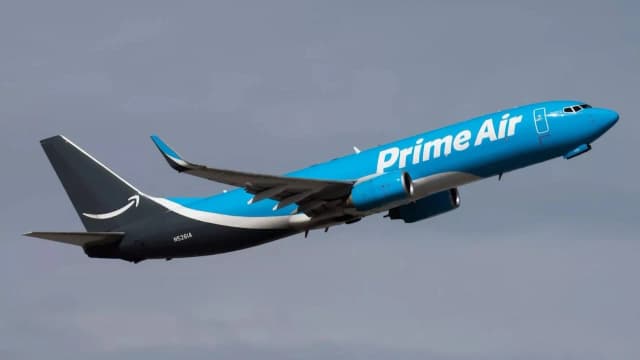
Inaugural Amazon Air flight from Delhi to Guwahati marks expansion of service to Northeast India
Amazon has expanded Amazon Air, its air cargo service to Northeast India, launching new routes connecting Kolkata and Guwahati.
Amazon has expanded its air cargo service "Amazon Air" to Northeast India, launching inaugural flights from Delhi to Guwahati. New routes connecting Kolkata and Guwahati have also been established.
Northeast India is geographically difficult to access, and traditional e-commerce deliveries typically took several days. The expansion of Amazon Air's cargo network is expected to significantly reduce delivery times.
As the Indian e-commerce market continues to grow, Amazon is investing aggressively in logistics infrastructure, positioning itself strategically ahead of intensifying competition with Flipkart.
Geopolitical Risks Accelerate E-Commerce Air Cargo Route Restructuring
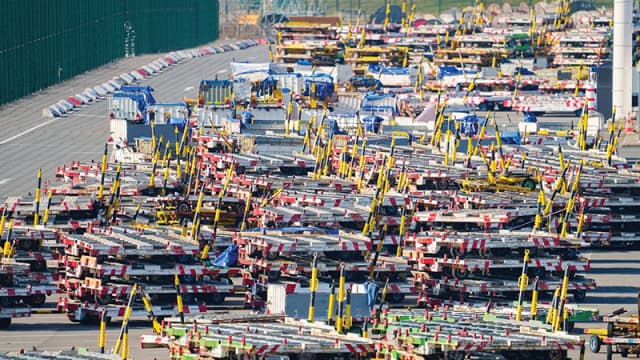
Geopolitical Effects On E-Commerce Spark Air Cargo Shift
E-commerce demand is here to stay in the long term, but Trump's tariffs led to trade lane changes and disruptions in the Middle East have caused rerouting.
Geopolitical shifts are having a significant impact on e-commerce-related air cargo. Trade route changes due to US tariff policies and flight path diversions caused by instability in the Middle East are occurring.
While the long-term structural support from expanding e-commerce demand for the air cargo market remains unchanged, short-term increases in transportation costs and lead time extensions are unavoidable. Platforms dependent on cross-border e-commerce and retailers with global supply chains are being forced to reassess their logistics strategies.
Combined with tariff enforcement and Temu's headwinds, the fundamental cost structure of cross-border e-commerce is clearly in transition.
Summary
Today's most notable development is AWS's publication of its x402 protocol technical vision. With a concrete protocol proposal for autonomous AI agent payments coming from a major cloud provider, agentic commerce implementation has entered a more realistic phase.
Meanwhile, at the macro level, geopolitical risks and tariff enforcement are accelerating structural changes across the e-commerce industry. Temu's headwinds and air cargo route restructuring indicate that cross-border e-commerce's low-cost model is at a turning point. Competition across regions is expected to intensify further, with Flipkart's IPO preparations and Amazon's expanding logistics investment in India.
Related Articles
AWS Unveils x402 Protocol-Based Autonomous AI Agent Payment Infrastructure for Financial Services
AWS publishes reference implementation for autonomous AI agent payments using the x402 protocol. Built on Amazon Bedrock AgentCore and CloudFront+Lambda@Edge, targeting the agentic commerce market projected to reach $5 trillion by 2030.

Coinbase-Backed x402 Protocol Tackles Agentic Commerce Payments — But Demand Has Yet to Catch Up
Coinbase-backed x402 protocol enables AI agent micropayments via stablecoins, but with only $28K daily volume, infrastructure leads demand.

x402 vs UCP — The Future Two Major AI Agent Payment Protocols Envision and the Barriers to Real-World Implementation
Coinbase's x402 (HTTP 402-based stablecoin payments) and Google/Shopify's UCP (commerce standardization protocol) emerge as foundations for AI agent commerce. The two are complementary rather than competing.
Tags
Share this article