
E-Commerce & AI Commerce News Digest (March 2, 2026)

Akihiro Suzuki
Twitter
Source: www.reuters.com
Key Takeaways
- Netcore's report declares agentic commerce as the new operating system for e-commerce, identifying six structural shifts
- Amazon India eliminates seller referral fees for low-priced products, intensifying platform competition
- Global e-commerce trends unfold across Vietnam, India, and AI product photography
Today's Top Stories
Netcore: "Agentic Commerce Is Becoming the New OS for E-Commerce" — Six Structural Shifts for 2026

Ecommerce Growth Trends 2026 Netcore Report Reveals Six Agentic Shifts
Netcore's Agentic Commerce Shift Report 2026 reveals how brands like Walmart, Fabindia, and Meesho drive ecommerce growth through execution-focused AI systems.
Netcore has released its "Agentic Commerce Shift Report 2026," asserting that agentic commerce is becoming the new operating system for e-commerce. Following the acceleration of AI adoption in 2025, the report's central analysis is that only brands that changed their "execution architecture" — rather than simply adding budgets and tools — achieved meaningful results.
The report identifies six structural shifts, including: unprofitable e-commerce is a "systems problem" rather than a "tools problem"; the biggest revenue leak occurs at the discovery stage rather than checkout; and always-on AI journeys generate higher incremental profit than campaign-driven calendar marketing.
Citing examples from Walmart, Fabindia, and Meesho, the report concludes that companies that embedded AI agents into execution workflows with shared context and clear ownership outperformed those treating AI as standalone tools. This report offers directly actionable insights for e-commerce operators designing their 2026 strategies.
Full article: Netcore Declares Agentic Commerce as the New OS for E-Commerce — Six Structural Shifts
AI Commerce Tools
Rewarx Launches Prompt-Free AI Product Photography Platform
Rewarx Launches Prompt-Free AI Platform to Automate 4K E-Commerce Product Photography
Rewarx launches a prompt-free AI platform for automated 4K e-commerce product photography.
AI product photography platform "Rewarx" has launched for e-commerce operators. Its standout feature is the ability to automatically generate 4K product images without any text prompts. While traditional AI image generation tools require prompt quality to determine output quality, Rewarx takes an approach that eliminates this barrier entirely.
Product image quality directly impacts conversion rates for e-commerce operators. As a tool that can efficiently generate consistent-quality images across large SKU catalogs while reducing dependence on professional photographers and studios, it offers significant practical benefits, particularly for small and mid-sized e-commerce businesses.
Full article: Rewarx Launches Prompt-Free AI Product Photography Platform
Global E-Commerce Trends
Amazon India Eliminates Seller Referral Fees for Products Under 1,000 Rupees

Amazon India slashes seller referral fees in retail growth push
Amazon will stop charging sellers in India referral fees for products under 1,000 rupees ($10.98), the company said on Monday, as it looks to attract more merchants to its online marketplace and get a stronger footing in the country's competitive e-commerce industry.
Amazon India has announced it will eliminate seller referral fees for products priced under 1,000 rupees (approximately $10.98). The move aims to attract more sellers to its platform and strengthen its competitive position in India's e-commerce market.
India's e-commerce market remains fiercely competitive with Flipkart (owned by Walmart) and Meesho, where customer acquisition in the low-price segment is key to platform growth. By lowering entry barriers for small sellers through fee elimination, this strategic move targets expanding product catalog breadth. It demonstrates that seller acquisition competition has become central to platform strategy across the e-commerce industry.
Vietnam's E-Commerce Market Enters a "Tougher Game" After the Boom

After the boom, Vietnam's e-commerce market becomes a tougher game
HANOI: After a decade of rapid expansion fuelled by subsidies and deep discounts, Vietnam's e-commerce market is entering a more disciplined era, as platforms raise fees and regulators tighten oversight.
After a decade of rapid growth supported by subsidies and deep discounts, Vietnam's e-commerce market is transitioning to a more disciplined era. As platforms raise fees and regulators tighten oversight, the competitive landscape is shifting significantly.
Southeast Asia's e-commerce market is reaching an inflection point from growth to maturity, and Vietnam represents a symbolic case. The shift from "growth through losses" to "sustainable revenue models" marks an important market change for global e-commerce operators considering expansion into the region.
Poor Product Data Costs India's E-Commerce Sector ₹5,000 Crore Annually

Poor product data costs India's e-commerce sector ₹5,000 crore annually: GS1 India study
GS1 India unveils a study quantifying the economic impact of poor product data quality in India's e-commerce ecosystem.
GS1 India has released a study titled "Uncovering the Hidden Cost of Poor Product Data in Indian E-Commerce." The report estimates that incomplete and inaccurate product information causes approximately ₹5,000 crore (roughly $600 million) in annual losses across India's e-commerce and quick-commerce markets.
Product data quality is foundational to e-commerce operations, directly impacting search accuracy, return rates, and customer satisfaction. In the era of agentic commerce, where AI agents read product data to make purchasing decisions, data quality becomes even more critical. For globally expanding e-commerce operators, strengthening product data governance is an urgent priority.
Logistics & Fulfillment
Robotics and AI Transforming E-Commerce Logistics — Artisan Technologies
Artisan Tech & Eli Yaaqov: Robotics transform e‑commerce
Advanced robotic cinematography and AI assisted workflows are reshaping product storytelling for global retailers.
Eli Yaaqov of Artisan Technologies discusses the transformation that robotics and AI are bringing to e-commerce logistics. He shares the view that advanced robotic cinematography and AI-assisted workflows are fundamentally changing product presentation for global retailers.
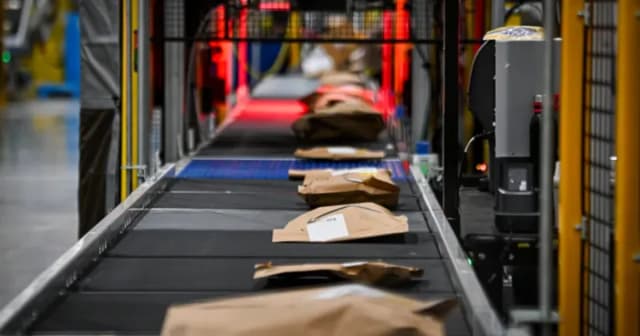
The adoption of robotics in e-commerce logistics is expanding beyond warehouse picking and packing into product photography and video production. In an industry facing growing labor shortages, the combination of robotics and AI for automation and efficiency represents a critical technology trend enabling e-commerce operators to reduce operational costs while improving quality.
Summary
Today's e-commerce and AI commerce trends focused on "execution" and "infrastructure." Netcore's six agentic shifts make clear that the quality and execution framework of AI adoption — not the volume — determines e-commerce growth. Amazon India's fee elimination signals that platform competition has entered a "seller acquisition" phase, while India's product data quality study highlights the importance of data governance in the AI era. Including Vietnam's market maturation and new AI product photography tools, structural changes in global e-commerce are advancing on multiple fronts.
Related Articles

EC & AI Commerce News Digest (February 27, 2026)
Bain publishes a comprehensive report on agentic commerce predicting a $300-500B market by 2030. Mirakl turns profitable, Google and Klaviyo deepen AI partnership. eBay lays off 800 and DHL-JD.com formalize a China-EU retail corridor.

Bain & Company Forecasts "Up to $500 Billion by 2030" for Agentic Commerce—Retailers Must Now Serve Both Human and AI Agent Customers
Bain & Company forecasts the US agentic commerce market at $300-500 billion by 2030. Analysis of three AI agent typologies, retail media disruption, and strategic imperatives for EC operators
Stripe's Annual Letter Proposes Five Stages of Agentic Commerce -- Currently at Levels 1-2, Charting the Path to Fully Autonomous Purchasing
Stripe's 2025 annual letter introduces a five-stage agentic commerce framework. Bot payments are growing but remain under 1% of total volume, with practical guidance for e-commerce businesses on staged preparation.
Tags
Share this article