
AI Wants to Shop for You — Here's Who Really Benefits: Visa, Google, and Yandex Race for Infrastructure Dominance

Akihiro Suzuki
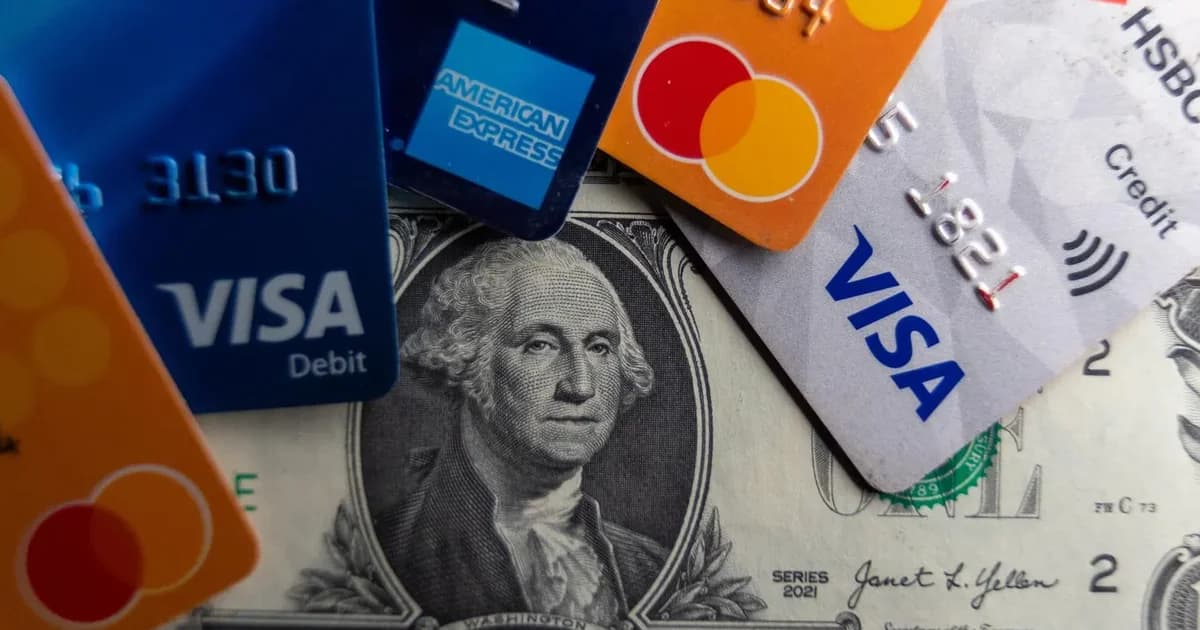
Source: www.forbes.com
Key Takeaways
- Visa, Google, OpenAI, and Yandex are racing to build agentic commerce infrastructure
- McKinsey projects up to $1 trillion market in the U.S. alone by 2030, with payment infrastructure becoming the new "toll road"
- E-commerce businesses must urgently evaluate protocol adoption and fee structures
Forbes Identifies the "New Toll Roads of Digital Commerce"

AI Wants To Shop For You. Here's Who That Really Benefits.
Who benefits from agentic commerce? Visa, Yandex, and others, are betting on infrastructure plays.
On March 25, 2026, Forbes published an article titled "AI Wants To Shop For You. Here's Who That Really Benefits." It points out that the focus of AI competition has shifted from "which model is smarter" to "which AI controls the moment of purchase."
According to Salesforce's research, during Cyber Week 2025, AI agents were involved in approximately one in five orders globally, with GMV (Gross Merchandise Value) reaching approximately $70 billion. Now, tech giants including OpenAI, Google, Amazon, and Yandex are competing for "checkout dominance" through AI.
AI Commerce Shifts from "Model Competition" to "Infrastructure Dominance"
Agentic commerce is a system where AI agents discover, compare, and complete purchases on behalf of consumers. McKinsey's October 2025 report projects growth to up to $1 trillion in the U.S. B2C retail market alone by 2030, and $3-5 trillion globally.
What drives this market are the "commerce protocols" being built by each company. As the Forbes article points out, these protocols may lack glamour but are overwhelming in precision. OpenAI's "Agentic Commerce Protocol (ACP)" handles authentication and payments, Google's "Universal Commerce Protocol (UCP)" manages real-time data integration, and Yandex's "YCP" covers transaction fulfillment.
The Forbes article describes these as "the new toll roads of digital commerce." OpenAI has announced a fee of approximately 4% per transaction, and the article warns that in a $1 trillion market, this becomes not just a cost but an "infrastructure tax."
The Infrastructure Battle Among Three Major Protocols
OpenAI x Stripe: ACP (Agentic Commerce Protocol)The ACP, co-developed by OpenAI and Stripe, is an open standard for AI agents to seamlessly execute everything from product discovery to payment completion. It started as "Instant Checkout," allowing direct purchases of Etsy seller products on ChatGPT, but as of March 2026 has pivoted to prioritizing merchant-side checkout experiences. PayPal also adopted ACP in October 2025, advancing connections with its global merchant network.
Google: UCP (Universal Commerce Protocol)Google's UCP is an open-source standard that enables consumers to purchase products directly through AI Mode in Search and Gemini. Over 20 partners including Shopify, Etsy, Wayfair, Target, and Walmart have joined, and through Google Pay-powered payments, consumers can complete transactions without visiting merchant sites.
Yandex: YCP (Yandex Commerce Protocol)Yandex's YCP, announced in February 2026, is Russia's first agentic commerce protocol. It enables product purchases within conversations with the AI assistant "Alice," building a unique ecosystem that integrates search, marketplace, and logistics. It offers four connection methods including 1C-Bitrix modules and API integration, lowering the barrier for small and medium businesses.
The Payment Infrastructure Linchpin: VisaVisa completed hundreds of AI agent payments with partner companies in 2025 and launched the "Visa Intelligent Commerce (VIC)" platform. It works with over 100 partners, with more than 30 developing in sandboxes. It has also introduced the "Trusted Agent Protocol" to distinguish between malicious bots and legitimate AI agents. Visa predicts that millions of consumers will purchase through AI agents by the 2026 holiday season.
Impact and Practical Implications for E-Commerce Businesses
The biggest dilemma highlighted by the Forbes article is that businesses face the choice of "absorbing new fees, passing them on to consumers, or offsetting them with improved conversion rates."
Preparing for protocol adoption is the top priority. Shopify-based businesses in particular will find Google UCP integration relatively straightforward. OpenAI's ACP is also published as open source on GitHub, and businesses should get up to speed on its specifications.
Fee structures require careful scrutiny. Whether OpenAI's approximately 4% fee level becomes an industry standard remains to be seen. At this stage, with inter-platform competition ongoing, businesses need to compare fee structures across protocols and simulate the impact on their own margins.
Consumer experience redesign is essential. In a world where AI agents handle purchasing decisions, structured data support for product information is indispensable. Businesses should advance their metadata preparation so AI can accurately understand and recommend products. At the same time, as the Forbes article points out, algorithm transparency regarding whether AI recommends based on "lowest price, fastest delivery, or highest platform fee" has not yet been established.
Summary
The main battleground of agentic commerce has shifted from AI model performance competition to infrastructure dominance. The protocols being built by Visa, Google, OpenAI, and Yandex have the potential to determine the "toll charges" of future digital commerce.
As the Forbes article warns, the "window" during which inter-platform competition benefits businesses and consumers is open, but it is unclear how long it will last. What matters most for e-commerce businesses is to advance multi-protocol readiness while this competitive environment persists and avoid dependency on any single platform. The next key milestones to watch are the full-scale rollout of Visa VIC planned for the second half of 2026 and the finalization of OpenAI ACP's fee structure.
Related Articles

The Agentic Commerce Wars — What the 'Race for the Glass' Means for Interface Supremacy
Forbes columnist analyzes the battle over where AI shopping agents will live. The interface war across OS, browser, protocol, and retail layers will determine who controls customer relationships.

Visa and Mastercard's Battle for Agentic Commerce Standards Heats Up
Visa, Mastercard, and Stripe release competing agentic payment standards in the same week. Mastercard open-sources cryptographic Verifiable Intent with Google, while Visa scales its Intelligent Commerce ecosystem.

As AI Takes Over the Shopping Journey, Stripe and PayPal Race to Become AI Business Infrastructure
Stripe and PayPal race to transform from payment tools to AI business infrastructure, competing to become the default engine for AI-driven transactions.
Tags
Share this article